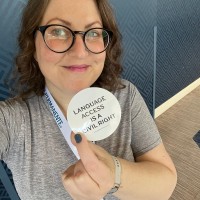
Mary Jayne McCullough
Person by Mary Jayne McCullough
About
Mary Jayne is the Founder and CEO of Global Wordsmiths and an Adjunct Faculty Lecturer of Translation Technologies and Applied Translation in the MA of Global Communication and Applied Translation program at Carnegie Mellon University. Mary Jayne als...
Mary Jayne is the Founder and CEO of Global Wordsmiths and an Adjunct Faculty Lecturer of Translation Technologies and Applied Translation in the MA of Global Communication and Applied Translation program at Carnegie Mellon University. Mary Jayne also serves as an appointed Commissioner for the Pittsburgh Commission on Human Relations, and sits on the Board of Directors of the Alliance for Refugee Youth Support and Education. She is an active member of several advisory boards and committees to share her broad expertise in the fields of language accessibility, applied translation, and business administration. Mary Jayne studied public service at the University of Pittsburgh and language translation & interpretation at the Universidad Autónoma Nacional de México in Mexico City, and brings twenty years of field experience as a translator, community interpreter, and language accessibility advocate & consultant to her roles. She is driven and passionate, and has dedicated her career to advancing a culture of language access.
What Matters

Takes (9)
It's not about me — watching the impact grow over time is what makes it worth it.
I'm still astounded by the kindness of others — and I know that sounds cliche, but I mean it.
I want the people doing this work to feel like they're part of a family, not just a workforce.
Better infrastructure means more people can participate, and those systems get stronger for all of us.
Honestly, crime rates go down and public health improves when people can fully participate in the systems around them.
I spent years yelling at hospitals about language access before realizing most people just didn't have the tools.
Language access affects everybody — not just the people who most visibly need it.
When people get information filtered through an untrained interpreter, they lose real agency over their own situations.
Being bilingual is incredible, but it's almost a small part of what it actually takes to be an interpreter.