Dogs · Matters.com — Big dogs, fast clocks

Digest Newsletter
·
Nov 14, 2026
Dogs · Matters.com — Big dogs, fast clocks
Welcome to Matters.com™ beta, where the world shows what matters. More information? Click here.
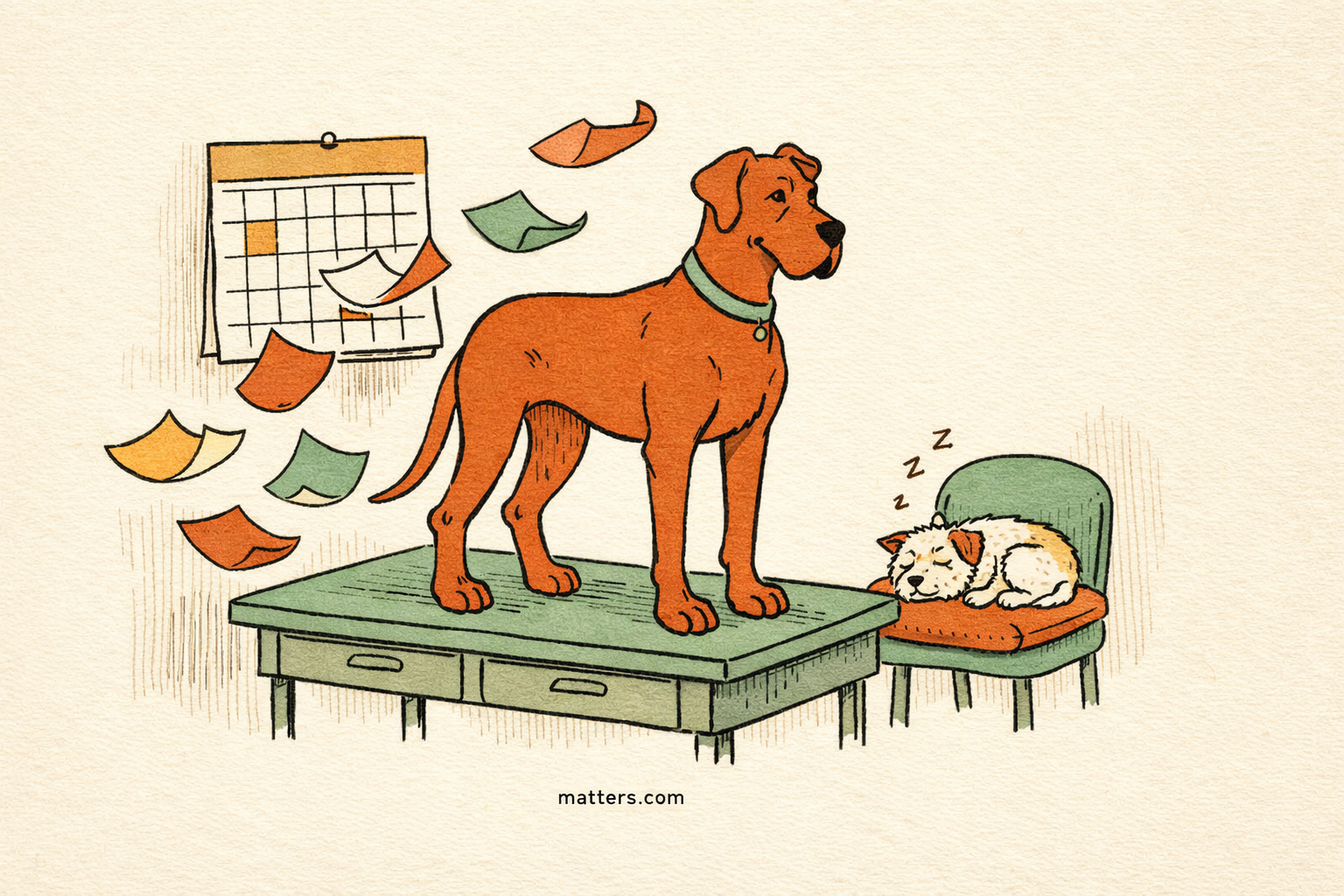
Bigger dogs age faster — and scientists think they know why
A new study finds that large breeds literally age at a faster rate than small ones, tying body size to cellular wear-and-tear in ways that could reshape how vets talk about lifespan and care. If you have a Great Dane, Mastiff or similar, this matters: the paper links size-related growth biology to faster aging markers, suggesting different screening and wellness timelines for big dogs. Read the reporting and the science here — it’s the kind of finding that could change preventive care schedules and how you budget for senior-dog needs.
Dogs that sniff out invaders
Researchers trained dogs to detect invasive plants with about 75% accuracy, opening low-cost options for early detection and ecological monitoring; read the field results here.
Mixed signals: dogs and human emotion
A study shows dogs can be tripped up when facial and vocal emotional cues conflict — they don’t always pick one over the other, which says a lot about how they juggle human signals; more on the experiments and what it means for training here.
Malinois finally home after long lone stretch
Belgian Malinois Major was released after nearly 600 days in isolation, a reminder of the real-world toll of long deployments on service dogs and the importance of reintegration care; the case details are laid out here.
Taste buds and tail wags
Dogs have roughly 1,700 taste buds (humans have about 9,000), which helps explain why they follow food with their noses and are less picky about flavors — texture and smell often seal the deal for them.