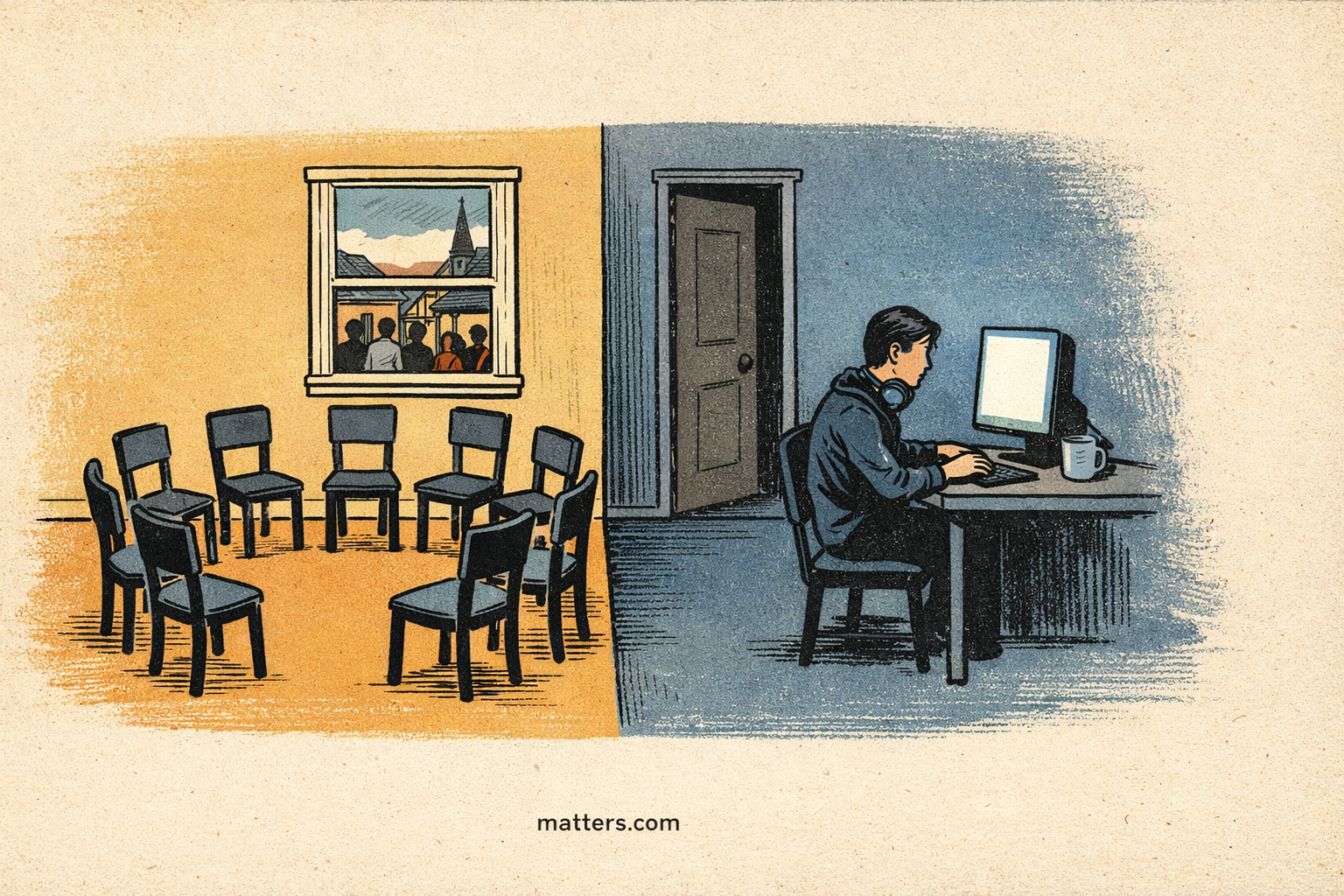
Today’s headlines orbit a common theme: how bodies and communities hold, hide, and heal pain — from individual grief and childhood norms to school climates and medical breakthroughs. There’s bad news (systems still fail) and quietly brave news (new rooms, new research, new rituals) — healing is messy, communal, and sometimes surprisingly surgical.
Emotional pain
Rituals end, boys are taught silence, and AI sings the ache
A Pakistani column warns bereaved people feel abandoned as social rituals fade, deepening isolation after loss (
why rituals stop), while a Nigerian piece shows how messages like “men don’t cry” seed lifelong shame and hidden pain (
masculinity and silence). [P]On a different beat, India’s first fully AI music artist is turning poetry into sound — a new avenue for expressing and processing emotional wounds (
AI music as expression), while self-help and celebrity rows remind readers that expectations and public scrutiny can amplify private pain.
Social emotional learning
Schools and families get serious about safety, SEL, and earlier supports
Save the Children links Hong Kong parenting practices to youth mental health, underscoring family interactions as early SEL levers (
family effects on youth). [P]Education leaders in Qatar are integrating SEL from the earliest years to shift school culture (
Qatar's curriculum push), while rising teen violence and bullying in Armenia show SEL must pair skills with safety and restorative practices (
violence and belonging).
Trauma-informed care
$1.45M student center, awards, and gaps in psychiatric compliance
Fayetteville State opened a
$1.45M mental health center with private suites and sensory rooms aimed at earlier, scaled trauma-informed campus care (
new campus center). [P]Ohio’s victim-assistance awards champion survivor-centered programs and spread trauma-informed practices (
victimology recognition), yet compliance drops at a Kilkenny psychiatric unit warn that institutional gaps still endanger consistent, safe care (
psychiatric compliance issues).
Chronic illness
Biological-age blood test, child immunity, and work helping recovery
A blood-based biologic-age measure may predict dementia risk, a potential game-changer for earlier screening and prevention (
blood predicts dementia). [P]Coverage on why children keep falling sick highlights sleep, stress, and diet as formative for lifelong illness risk (
child immunity factors), and an NHS-backed employment program shows supported work can rebuild confidence for people with long-term conditions (
work aiding recovery).
Trauma
Justice and memory: contested freedoms and healing sites
Belgium’s repeated prison leaves for the Bataclan mastermind spotlight how contested post-conviction decisions can retraumatize victims and communities (
Bataclan prison leaves). [P]In Ghana, Elmina Castle is being reframed as a place for collective mourning and healing, showing the power of site-based memory work in confronting historical trauma (
Elmina as healing site).
Neuroscience
Social exclusion, slow dopamine, and surgery through the eye socket
Research links adolescent self-harm to social exclusion’s effects on attention and autonomic regulation, clarifying psychosocial triggers for neural stress pathways (
social exclusion study). [P]A piece on steady reward (‘slow dopamine’) explains why routine activities like exercise stabilize motivation circuits (
slow dopamine benefits), and Singapore surgeons removing a brain tumor via the eye socket demonstrates minimally invasive advances that preserve function (
novel surgical route).
Parenting
Mediation offers calmer splits and better co-parenting
A Toronto divorce mediation service markets out-of-court resolutions aimed at reducing conflict over custody and improving co-parenting outcomes, which can protect children's emotional stability during transitions (
divorce mediation in Toronto).
Emotional intelligence
Leadership, family phrases, and body-based release tools
Transformational leadership models that prioritize empathy are linked to stronger organizational emotional intelligence and culture (
leadership and EI). [P]Critiques of Baby Boomer parenting suggest some common phrases caused adult emotional harm and are reshaping how caregivers teach emotional skills (
parenting language effects), while somatic tools like TRE offer trauma-release approaches that may reduce hyperarousal and bolster regulation (
TRE and somatic release).
Education
Teaching hard history and training more nurses
Revisiting the
Komagata Maru incident is being used to teach immigration racism and civic history, offering a concrete curricular moment for racial literacy (
Komagata Maru teaching). [P]Meanwhile, The Queen's Health Systems is prioritizing training for newly licensed nurses to shore up clinical staffing and practical workforce pipelines (
nursing workforce development).
Mental Health
Age vs ability in driving: nuance over blanket rules
A study argues that chronological age alone shouldn’t determine driving fitness, urging assessments that protect autonomy and mental health by avoiding stigma and unnecessary loss of independence (
reevaluating age-based driving rules).
Psychology
Rehab-focused penology, ‘lazy’ intelligence, and youth civic agency
Criminology and penology discussions emphasize offender treatment and rehabilitation as psychological and moral work (
rehabilitation focus). [P]Pieces on intelligence explain how certain high-IQ behaviors can be misread as laziness (
intelligence vs perceived laziness), and examples of adolescents serving on local commissions show civic roles shaping identity and agency in young people (
students in civic roles).