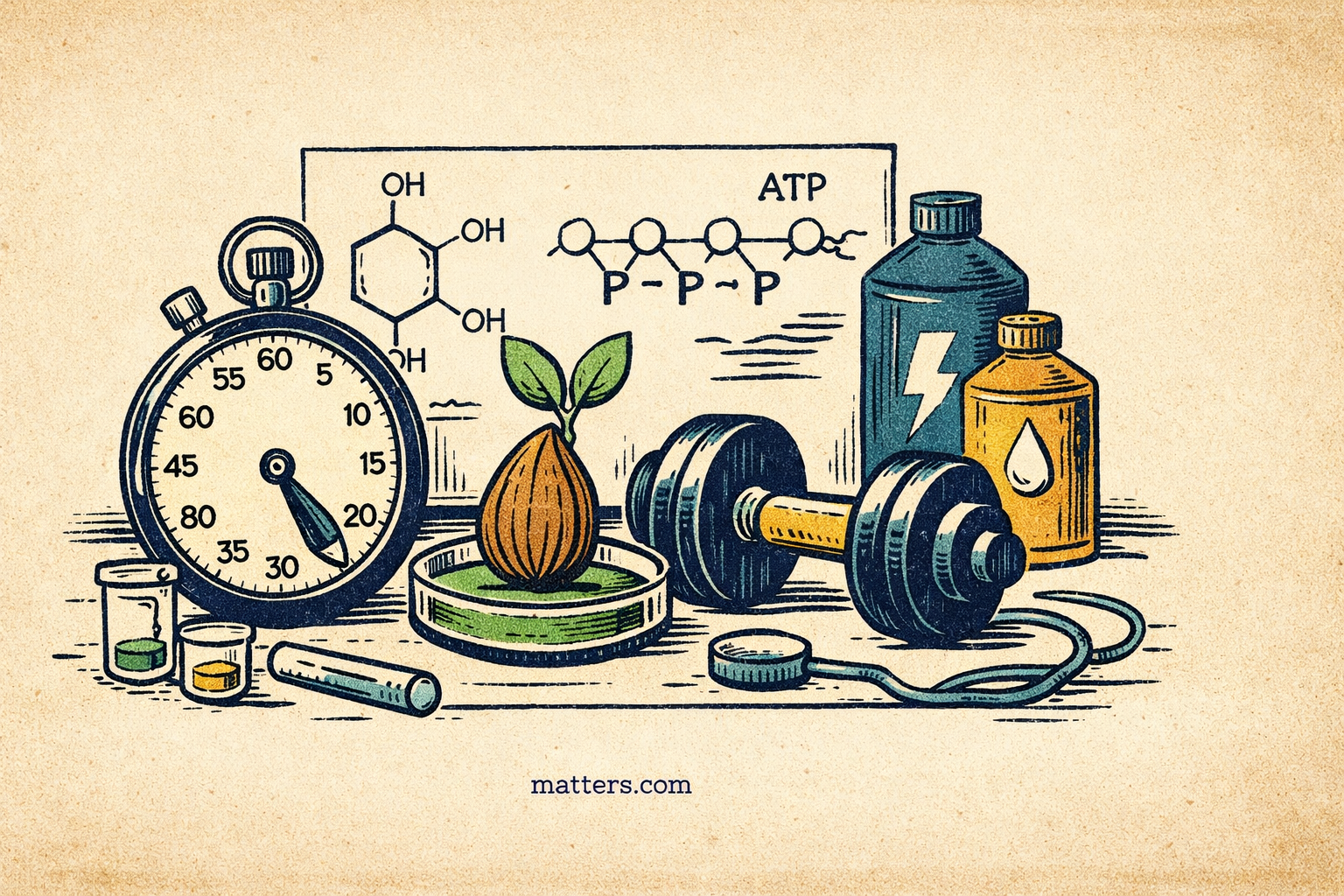
Athletes, policy wonks and inventors of radical tech got a jolt this week as competitions that openly allow enhancement tilted conversations about safety, longevity and what counts as ‘fair.’ Meanwhile, energy and nutrition stories quietly reshuffle the practical decks — from RAF fuel buys to almonds helping prediabetes — so there's plenty to tinker with, tune, or politely object to.
Biohacking
Enhanced Games forces a reckoning over allowed enhancement
The new
Enhanced Games openly permits performance-enhancing drugs, pushing debate about athlete safety, public acceptance and regulation. [P]That public experiment reframes biohacking from niche DIY tinkering into a mainstream policy problem where consent, monitoring and long-term harms matter — like letting someone rewire a tractor without a manual but with way higher stakes.
Enhanced Games could set precedent for how society tolerates or curbs human augmentation.
Nutrition
From almonds to microplastics — diet science meets public health
A 24-week trial found daily
almond consumption improved executive function and metabolic markers in prediabetic adults, suggesting simple foods can shift disease risk. [P]At the same time,
microplastics in children's products, chewing and meal‑skill gaps in older adults, plus a nutrient–allergy analysis, all highlight that access, preparation and contamination shape nutrition across the life course — not just calories.
Food quality now reads like infrastructure.
Technology
Nvidia's keynote and fresh chip buying shift AI infrastructure bets
Nvidia CEO Jensen Huang's Taipei visit ahead of a June keynote has markets and developers bracing for product and AI roadmap signals in hardware: a possible catalyst for demand shifts (
report). [P]At the same time, a top investor's heavy buying into
semiconductor stocks underscores continued capital flow into the chips that underpin AI and high‑power electrified systems — basically the fuel injection for future inventions.
Chip demand remains the choke point for scaling compute-heavy projects.
Sustainable Energy
RAF's £1bn biofuel push and rooftop solar guides accelerate uptake
The RAF will spend over £1bn over 15 years to switch to sustainable jet fuel, a major procurement signal that could scale
biofuel supply chains and lower aviation emissions. [P]Parallel grassroots momentum comes from accessible
photovoltaic guides helping homeowners adopt rooftop solar, nudging distributed energy growth and resilience. Together they illustrate top‑down demand and bottom‑up adoption both moving toward decarbonization — think big turbines and backyard panels holding hands.
Longevity
Performance drugs vs. long-term health; tontines reappear for retirees
Stories about competitions that tolerate enhancement raise immediate concerns over short‑term performance gains at the expense of long‑term health and lifespan, reframing longevity as both personal biology and policy (
report). [P]On the financial side, revived interest in century‑old
tontines is resurfacing pooled‑risk tools to manage uncertain lifespans, a practical complement to biomedical longevity efforts.
Longevity now sits at the crossroads of health choices and how society shares risk.
Fitness
Ancient Spartan training and adaptive golf show two fitness poles
A look at ancient
Spartan child‑rearing highlights how extreme early physical conditioning aimed to produce endurance and toughness — a historical mirror to modern training philosophies. [P]By contrast, an adaptive clinic using
golf to build balance and confidence for blind and low‑vision participants shows how inclusive programs broaden who gets the benefits of fitness; both stories remind that purpose and access steer outcomes.
Fitness isn't one size — it's either a boot camp or a welcome mat.