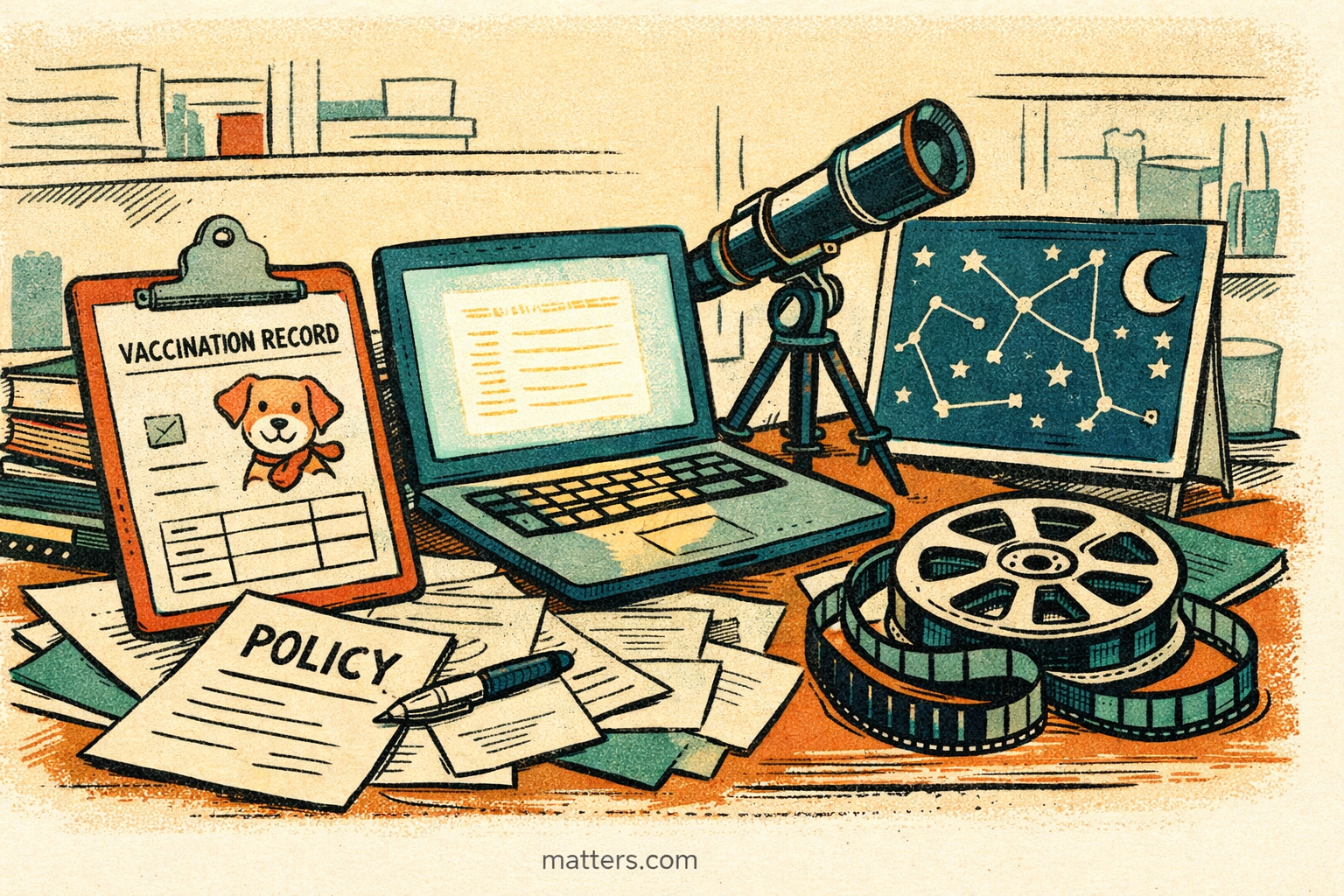
A mix of policy, culture and a little cosmic mystery today — from governments declassifying UFO clips to startups tripping over privacy while chasing AI dreams. Also: a province-wide rabies push, theatre and music bouncing back, and a few human stories that remind everyone why context beats clickbait.
Dogs
Sindh launches anti-rabies drive as Scooby-Doo returns to streaming
Sindh rolled out a province-wide anti-rabies campaign pairing mass vaccinations with stray-population measures to cut preventable deaths — a public-health push that matters for municipal budgets and logistics (
read). [P]Meanwhile, pop culture leans on canine charm as
Scooby-Doo returns to streaming, proving fictional dogs still shape public attention and empathy for real-world animal issues (
read).
Artificial Intelligence
Privacy scandals, chip bets, and AI falling short for federal work
A Bengaluru startup filmed customers’ homes to train models, sparking privacy backlash and raising alarms about surveillance in domestic AI pilots (
read). [P]At the same time
NVIDIA projects China into a $200B market as GPU demand soars (
read), even while SpaceX’s xAI found Grok underwhelming for federal users — a reminder commercial AI still struggles with high-security, mission-critical use cases (
read). Researchers used AI to mine Reddit for hidden drug side effects and students are shifting to tech-plus-skills courses, showing both the promise and disruption AI brings to medicine and education (
read,
read).
Love
Reconciliation, hospitality, and the perils of fake intellect
A friendship between Emmett Till’s cousin and a descendant of a Jim Crow architect shows reconciliation can rebuild trust and model restorative love for communities (
read). [P]Hospitality brands like Swiss-Belhotel are designing family-first experiences to deepen guest bonds, while psychologists warn that faking intellect for admiration quietly corrodes intimacy — useful cues for anyone building culture or community platforms (
read,
read).
Ufo
222 released files include clip of jet shooting down a suspected UAP
A fresh declassification released 222 files and a striking clip of a fighter jet shooting down a suspected UAP, reigniting scrutiny of past government handling and transparency (
read). [P]Astrophysicist Dr. Emma Chapman weighs in with a measured stance — intelligent life is plausible but government visit-and-cover-up stories don’t hold up to scientific scrutiny — while Joe Rogan keeps the UFO conversation alive in mainstream audio media (
read,
read).
Cybersecurity
AI-driven hacks and blockchain trust debates reshape threat models
Reporting shows AI is being weaponized to scale state-linked intrusions, underlining how automation changes the cybercrime playbook and defensive priorities (
read). [P]Meanwhile, Vitalik Buterin reiterated the Ethereum Foundation’s limited holdings and role — a governance clarification that matters for resilience and trust assumptions in blockchain security (
read).
Misinformation
Fact-check archives and viral denials show old patterns, new channels
Fact-checkers compiled early COVID checks to map the original infodemic and help prevent future spread of false health claims (
read). [P]High-profile denials — from SITA refuting breach rumors to embassy rebuttals of bribery claims — and influencer-driven election allegations show how quickly cybersecurity scares and political narratives mutate into persistent misinformation (
read,
read).
Art
Live music returns in Tehran; theatre and TV remix audience tastes
Live concerts resumed in Tehran after weeks of disruption, a cultural comeback that signals resilience and renewed public engagement with music (
read). [P]Back home, New Jersey theatre is spotlighting solo shows to revive historical voices and TV critics are reshuffling romance programming — small programming moves with big ripple effects on audience taste and commercial deals (
read,
read).
Education
Leadership, dress codes, and a principal’s viral outburst shake schools
A new 40-year-old JAMB Registrar appointment is being hailed as a leadership refresh that could affect exam administration and access in Nigeria (
read). [P]Karnataka reversed its 2022 hijab ban, restoring classroom access for students, while authorities probe a viral clip of a principal swearing on a school trip — small incidents that spotlight policy, rights, and conduct in education (
read,
read).
BRCA-2
Faster genomics predictions and a family’s search for inherited risk
Researchers published a new embedding method that speeds prediction of variant pathogenicity — a technical advance that could shrink the gray zone around BRCA-2 variants of uncertain significance (
read). [P]A St. Charles woman traced her breast-cancer risk to PALB2, underscoring how individual genetic diagnoses cascade into family testing and care decisions (
read).
dehumanization
Old texts and teaching guides reveal how dehumanization is taught
A discovered 1934 title that trafficked in crude Jewish stereotypes shows how popular literature can normalize antisemitism across generations (
read). [P]A discussion guide on slavery and the phrase ‘no rights’ highlights how legal language and curricula can entrench long-term dehumanization — important context for cultural and policy reformers (
read).
Parenting
Health scares and parental choices test family bonds
A child’s viral illness and a pregnant parent’s health crisis show how quickly medical events reorder family priorities and care logistics (
read). [P]Separately, a father skipping a college graduation for personal plans sparks debate about presence, priorities, and the unglamorous trade-offs of parenthood (
read).
Disneyland Paris
Theme-park photos raise safety and reputation questions
Images posted by a wanted former lawyer enjoying Disneyland Paris have stirred questions about guest safety and the park’s reputational exposure when visitors with legal issues share high-profile visits (
read). [P]The episode is a reminder that hospitality brands need sharp incident-response playbooks in an era of instant social proof and scrutiny.