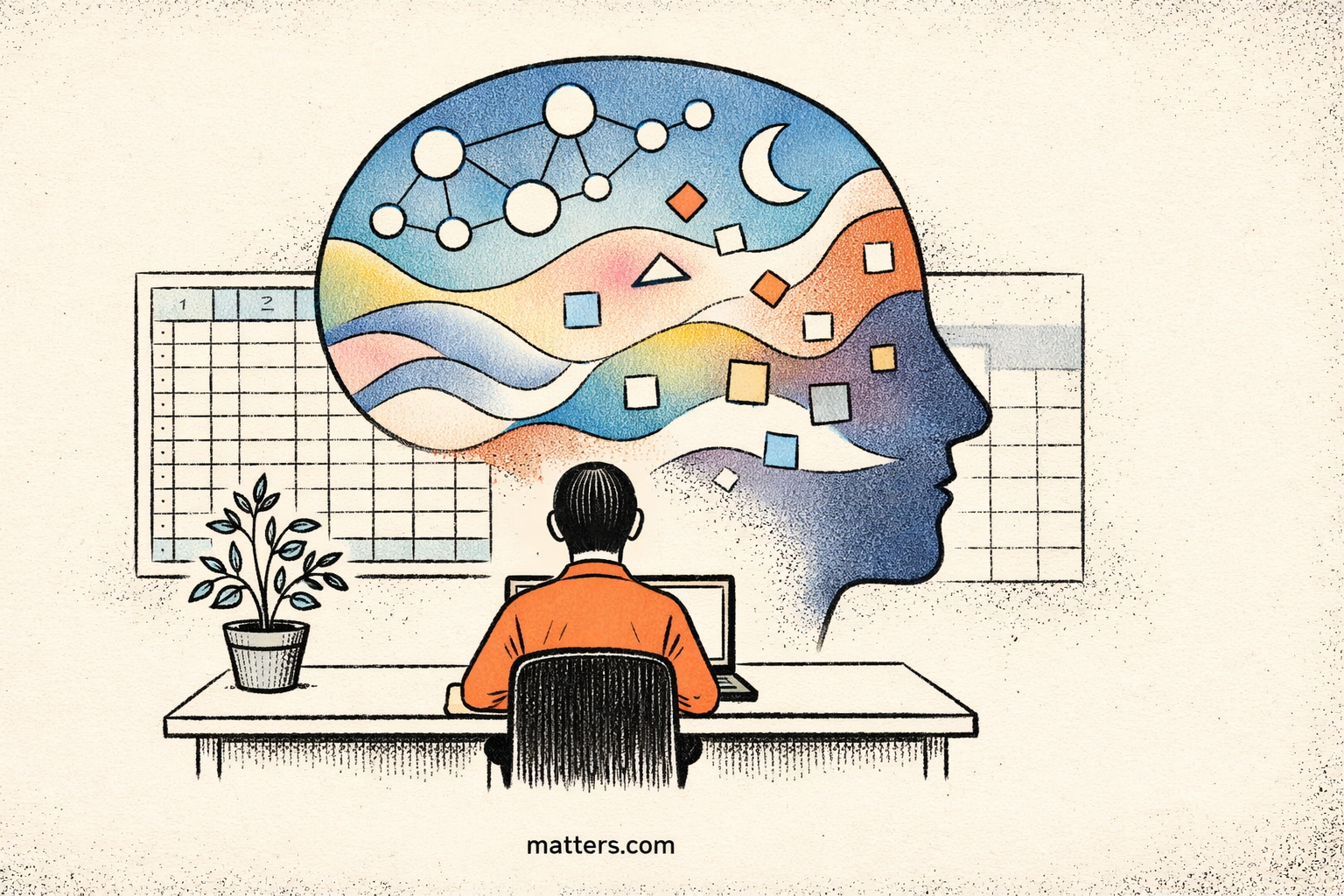
Brains are doing the heavy lifting today: new work is nudging how memory, attention and internal conflict shape what people notice and how they feel, while stories about fear, grief and everyday caregiving remind the nervous system that context matters. Expect useful nudges for trauma‑informed practice — and one charming reminder that tiny plants and spreadsheets both change behavior in subtle ways.
Psychology
Memory-driven gaze, internal consensus models, and why sets make actors anxious
A new study finds
fixation duration in natural scenes is driven more by memory encoding than raw visual processing, shifting how attention and learning are linked (
study). [P]Neuroscience frameworks proposing movement from internal contradictions to internal consensus offer practical models for resolving anxiety and identity fragmentation in therapy (
framework). Meanwhile, reports of actors feeling near‑insane on maze‑like sets highlight how immersive spatial distortion can trigger acute fear responses relevant to exposure and somatic work (
Backrooms set).
Parenting
Practical school habits, chore friction, and shifting custody routines
Guidance on concrete parent habits—like study routines and scaffolded responsibility—reinforces how early structure supports learning and emotional safety (
education guide). [P]Conversations about unequal housework reveal how validation and chore imbalance fuel family stress and relationship dynamics (
chores piece). And a high‑profile co‑parenting shift as Helen Flanagan leaves the family home highlights the practical ripple effects custody changes have on children’s routines and attachment needs (
co‑parenting story).
Mental Health
Physical symptoms, stigma, and public safety shaping mental‑health risks
A study linking persistent pregnancy nausea to higher anxiety and depression risk underscores how somatic symptoms can flag need for early perinatal mental‑health support (
pregnancy study). [P]Reporting on a son’s overdose linked to family rejection of bisexuality shows how stigma and nonacceptance amplify suicide and substance‑use risks (
family rejection). Separate coverage of police feeling suicidal under prolonged investigations and a viral bus assault emphasize urgent workplace and community safety gaps that increase trauma exposure and demand better supports for those affected (
police report).
Education
Nations build research, students win scholarships, and when to ditch Excel
Vietnam’s leader called for a modern, self‑reliant scientific research system to train experts and anchor policy—an institutional push that matters for workforce wellbeing and community health (
Vietnam science). [P]Local wins include a Lo‑Ellen student named a U of T Wolf Scholar, a reminder that targeted scholarships can open high‑support pathways for bright students (
scholarship). And a practical piece on when to stop using Excel nudges educators and clinicians to teach the right tools for complex data—small skill shifts that reduce overwhelm and errors in professional practice (
spreadsheet advice).