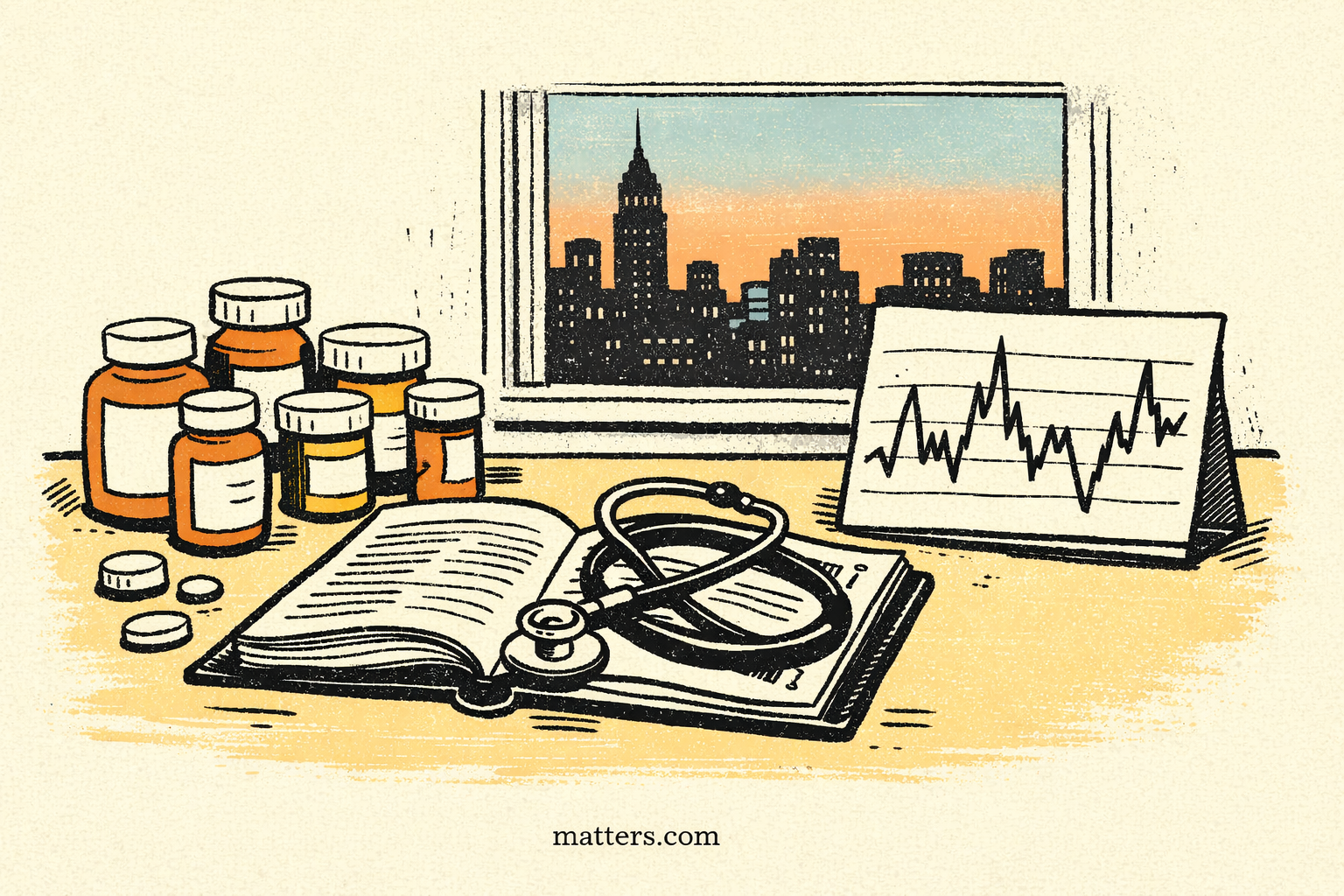
A little chaos, a little compassion, and a sprinkle of science: today’s headlines swing from high-stakes politics and sports drama to breakthroughs in brain tech and worrying public-health trends. Expect wins, losses, and the odd reminder that humans (and dogs) remain gloriously unpredictable.
Addiction
New threats, policy shocks, and a few tiny victories in the addiction fight
A spate of alarming overdoses and novel drugs — from deadly
nitazene claims in Georgia to a surge in Benadryl misuse tied to online dares — has public-health officials on edge (
nitazene,
diphenhydramine). [P]At the same time, courts and regulators are reshaping the landscape: Meta and YouTube were found to have engineered addictive apps (
$6M ruling), Medicaid cuts in Minnesota threaten thousands of addiction-care providers (
3,400+ providers), even as some regions report progress against the opioid crisis (
Mass. under 1,000 deaths).
Sport
World Cup joy, record-breaking feats, and a gambling scandal shadow
The 2026 FIFA World Cup lit up U.S. crowds as
Team USA opened with a 4-1 win (Balogun brace) and packed watch parties in Oakland and beyond (
match report,
watch party). [P]Track fans got a treat as 20-year-old
Ja'Kobe Tharp smashed the 110m hurdles world record (12.75s) (
Eugene), while college football and the Big 12 face fallout from Brendan Sorsby's $90,000 betting admission and eligibility fight (
gambling controversy), a reminder that sports glory and off-field risk are weirdly inseparable.
Refugees
Policy, safety, and shaken trust reshape refugee protections worldwide
Resettlement and asylum systems are under scrutiny as the EU rolls out a new Migration and Asylum Pact and troubling U.S. patterns emerge — Texas approval of mostly white Afrikaner refugees raises equity questions (
EU pact,
Texas approvals). [P]Humanitarian trust was further damaged by an internal MSF report alleging sexual exploitation of refugees in Chad (
MSF probe), even as conflicts in Lebanon and possible Iran–U.S. peace moves promise to reshape displacement flows (
Lebanon,
Iran talks).
Dogs
Screwworms, beach toxins, and desperate search-and-rescue tug at the heartstrings
Animal health alarms are real: FDA emergency clearance for nitenpyram to treat
New World screwworm reflects a surge in cases after confirmation in Texas (
FDA EUA,
San Angelo). [P]Pets also face oddball hazards — meth contamination at a San Diego dog beach landed a pup in emergency care (
meth exposure) — while heartbreaking human tragedies include dogs lost in fires and animals killed in violent crimes, a blunt reminder that community safety and animal welfare travel the same street.
Mental Health
AI, teen crises, and policy gaps tighten the mental-health spotlight
AI chatbots are under legal and clinical scrutiny after a wrongful-death suit alleges ChatGPT interacted with a woman before her suicide, while studies show nearly 1 in 5 teens use chatbots for emotional support — raising safety flags for digital therapy tools (
lawsuit,
JAMA Pediatrics findings). [P]The crisis deepens domestically with Medicaid gaps for children's services and rising teen sadness, even as creative interventions — from puppy therapy in jails to paid mental-health days pilots — suggest practical, low-tech routes to help (
Medicaid cuts,
animal-assisted therapy).
Book
Reading, representation, and the celebrity book-machine keep turning
A fresh report finds nearly half of Pennsylvania teacher-prep programs fail to teach the
science of reading, sparking literacy alarms (
Pennsylvania study). [P]Meanwhile, books continue to be a political and cultural battleground — from new takes on the Epstein files to celebrity deals for Prince Harry that expose the emotional cost of monetizing notoriety (
Epstein revelations,
Harry deal) — and indie scenes like Philadelphia’s Black-owned bookstores keep proving that communities build reading culture one shelf at a time.
Rape and sexual assault
High-profile cases and systemic failures reshape access and accountability
Criminal charges are reshaping sports access: Ghana’s midfielder
Thomas Partey was denied entry to Canada and will miss the World Cup opener due to London rape charges (
visa denial,
coverage). [P]Meanwhile, activism and prosecutions — from guerrilla theater demanding attention to Jeffrey Epstein victims to convictions of predatory rideshare impersonators — show both progress and the long work ahead to protect survivors (
Epstein protests,
rideshare conviction).
Politics
Trump-era fights, foreign flashpoints, and institutional showdowns
Domestic politics are noisy: the Kennedy Center lost a court skirmish over removing Trump’s name, the Strategic Petroleum Reserve sits near record lows complicating energy policy, and the Semiquincentennial plans (including UFC events at the White House) have divided opinion (
Kennedy Center,
SPR low,
America-250). [P]On foreign policy, delicate Iran–U.S. dynamics and Iran’s power plays back home — especially the IRGC’s growing influence — mean diplomacy could wobble toward confrontation or a rare opening for de-escalation (
IRGC rise,
postponed strikes).
NASA
Moon crews, supersonic milestones, and a trillionaire shaking up space
NASA announced the four-person crew for
Artemis III (Bresnik, Douglas, Rubio, Parmitano) targeting a 2027 launch, signaling renewed momentum toward a human return to the Moon (
Artemis III crew). [P]Meanwhile, flight tech and commercial pressures converge: the X-59 hit target speed/altitude for quiet-supersonic tests (
X-59 milestone) even as Elon Musk’s SpaceX IPO crowns him the world’s first
trillionaire, reshaping NASA partnerships and the space economy (
SpaceX IPO).
PTSD
Big-money deals and tech clearances accelerate new PTSD treatments
Pharma and neurotech are sprinting:
Otsuka completed a $700M acquisition of Transcend Therapeutics to fast-track rapid-acting PTSD drugs (
Otsuka buy), while the FDA cleared Wave Neuroscience’s MeRT platform after trials showed meaningful symptom reductions (
MeRT clearance). [P]New brain-research papers also sharpen the science — distinct roles for the prefrontal cortex and limbic system in stress regulation could inform where to target these next-gen therapies (
neuroscience study).