Coffee · Matters.com — What coffee means for your brain and mornings

Digest Newsletter
·
Jun 14, 2026
Coffee · Matters.com — What coffee means for your brain and mornings
Welcome to Matters.com™ beta. A new social platform to share what matters. More information? Click here.
You guard your morning cup like a tiny, sacred ritual — the hush before the world restarts. This week’s picks land where that ritual meets the real stuff you care about: brain health, caffeine culture, and the price on the shelf.
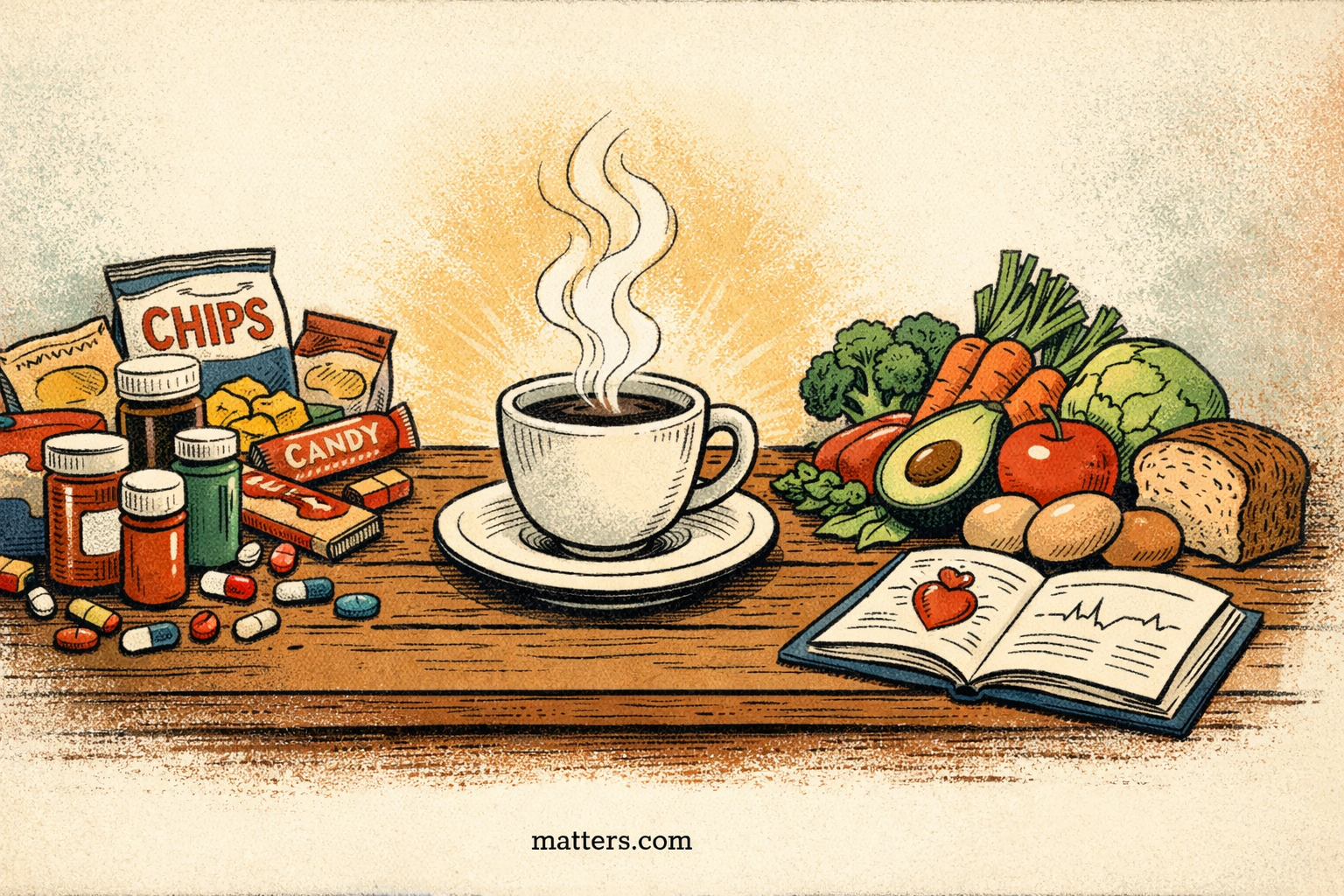
Study flags ultra-processed foods; coffee stands apart
Researchers found links between heavy consumption of ultra-processed foods and **brain shrinkage** plus higher dementia risk — and notably coffee wasn’t flagged in the same way. For anyone who treats coffee as a ritual and a daily brain-sidekick, that separation matters: it reinforces that your brewed habit may be a different health signal than many packaged snacks. It doesn’t make coffee a miracle cure, but it does underline why simple, less-processed beverages can be a small win for long-term mental clarity.
Price drop at Folgers & Café Bustelo
Falling coffee commodity costs have prompted the owner of Folgers and Café Bustelo to cut retail prices — a little relief for morning budgets and the ritual that comes with them. Expect slightly friendlier shelf tags.
Low-dose caffeine trend
A wave of reduced-caffeine drinks is arriving for people who want the boost without the tremble — think a gentler ritual that still respects the morning engine. Low-dose options mean you can customize the kick.
Salmonella recall touches coffee world
A recall tied to contaminated dry milk powder led to 913 recalled cases of Alfredo sauce — a reminder that supply-chain quirks can ripple into odd corners of the food world, including coffee-adjacent products. Supply chains are messy.
Coffee is a top antioxidant source
Across many diets, brewed coffee is one of the largest single dietary sources of antioxidants — compounds linked to reduced cellular damage. So beyond the ritual buzz, your cup is quietly contributing compounds that researchers study for long-term health effects.