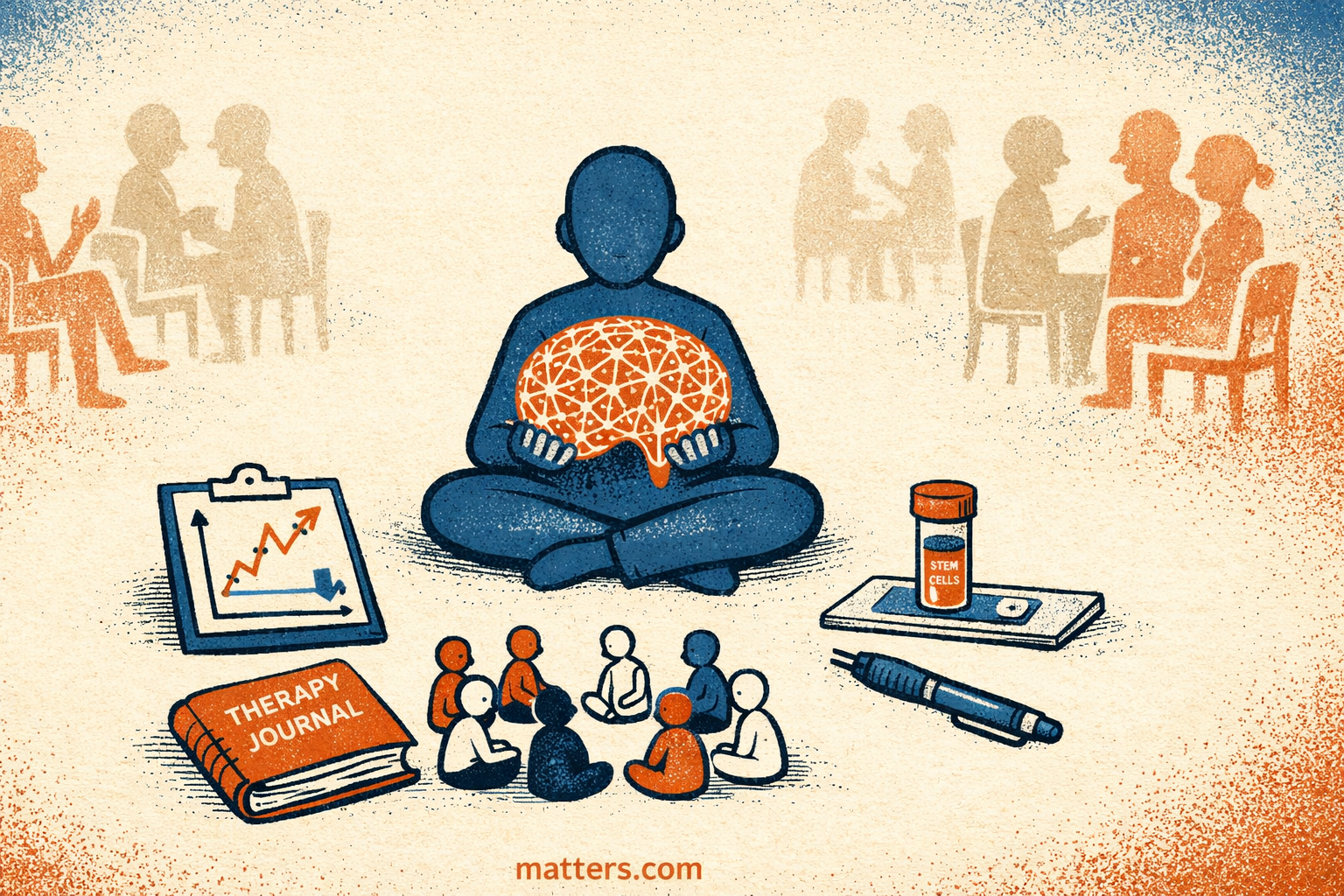
Science is doing the heavy lifting this morning — from a big study tying traumatic brain injury to a cascade of neuro‑diseases to policy and cultural shifts that are reshaping how communities care for distress. There’s good news (new stem‑cell tools and therapy trials), urgent alarms (surging youth suicide and social‑media harms), and powerful survivor-led advocacy demanding trauma‑aware systems.
Neuroscience
TBI fuels a two‑way risk loop; new tools to study and treat neurodegeneration
A large study of
55,204 veterans found traumatic brain injury, epilepsy, stroke and dementia accelerate one another in a dangerous bidirectional loop, reframing how clinicians should monitor risk after TBI (
study). [P]Meanwhile, research advances include the launch of the
iSCORE‑PD isogenic stem‑cell repository to probe Parkinson’s biology (
iSCORE‑PD) and promising preclinical data that a copper compound clears amyloid and improves memory, offering new therapeutic avenues (
Cu(ATSM)).
Emotional pain
Rising Black male suicides and survivors breaking long silences
A CDC‑linked report shows a startling
53% rise in suicide deaths among young Black men since 2014, marking a demographic shift that requires culturally attuned prevention strategies (
report). [P]In a related plea, Jacqueline Patterson’s op‑ed centers intimate‑partner violence and the silence around murders of Black women, underscoring how community‑level trauma and stigma obstruct healing and safety (
essay).
Mental Health
Funding, crises, and contested policies reshape mental‑health care
The federal government announced over
$700 million for mental‑health, addiction, and homelessness programs — with ~$239M earmarked for crisis lifeline expansion — signaling major new resource flows (
funding). [P]But alarms persist: deadly TikTok trends and rising youth suicides, criminalization of homelessness in Louisiana, and explosive overdose and detention‑center incidents spotlight systemic gaps; the VA is also launching MDMA trials for PTSD in veterans, showing clinical innovation alongside policy turbulence (
TikTok case,
MDMA trial).
Parenting
Cost, screens, and shifting parent roles are reshaping childhood
Parents are squeezed by rising food prices and summer‑program costs, forcing tradeoffs that affect child nutrition and enrichment (
groceries,
camp). [P]At the same time, teachers blame early social‑media access for learning declines while new data show fathers becoming more emotionally present; both trends matter for attachment and the social‑emotional scaffolding children need (
screens,
fatherhood).
Education
Federal tug‑of‑war, special‑ed shifts, and AI are disrupting schools
Tensions rise as the administration touts state control while critics point to new federal moves that bite into that claim, complicating education governance (
policy). [P]Major structural changes include moving special‑education oversight out of the Education Department and debates over school choice and accreditation — all of which could fragment services for vulnerable students while AI forces colleges to reassert the value of human learning (
special‑ed,
AI).
Emotional intelligence
Emotional skills edge out code: EQ becomes the high‑stakes human advantage
Tech leaders like
Sam Altman frame emotional clarity as the defining human skill in a post‑AGI world, and HR research shows life skills and EQ are now top hiring priorities — a reminder that relational wisdom matters more as automation handles the rest (
Altman,
study). [P]Meanwhile, rising narcissism threatens empathy norms, making deliberate EQ cultivation a public‑health as well as workplace priority (
analysis).
Social emotional learning
Safety, art, and literacy tied to kids' emotional development
A handgun found at a Wisconsin high school prompted clearer safety protocols, underscoring that physical security is foundational to social‑emotional learning (
Green Bay). [P]Grassroots programs like Chicago’s
The Simple Good use art therapy to help youth process hardship and build resilience, while persistent literacy gaps threaten students’ confidence and engagement — both core SEL concerns (
art therapy,
literacy).
Psychology
Therapy wins, sleep and attachment matter, and grandparents can help
A major King's College study found trauma‑focused therapy integrated with CBT safely reduces PTSD in people with psychosis, expanding treatment options for complex cases (
study). [P]Research also spotlights simple, high‑leverage levers: early bedtimes correlate with greater happiness, phone competition with caregivers predicts insecure attachment in teens, and grandparents are emerging as an underused support for youth wellbeing — small systems, big impact (
sleep,
attachment).
Trauma-informed care
Survivors walk 1,500 miles to demand listening and safety
A survivor’s 1,500‑mile walk across Florida is centering the voices of the estimated
42 million+ Americans affected by child sexual abuse, turning personal testimony into public pressure for trauma‑informed systems and safe disclosure spaces (
op‑ed). [P]The march is a vivid reminder that policy and practice must meet survivors where they are — culturally attuned, accessible, and body‑safe — to move from harm to healing.