Work pressures, school AI scandals, and a national rethink on mental meds
Digest Newsletter
·
Jun 23, 2026
Work pressures, school AI scandals, and a national rethink on mental meds
Welcome to Matters.com™ beta, where the world shows what matters. More information? Click here.
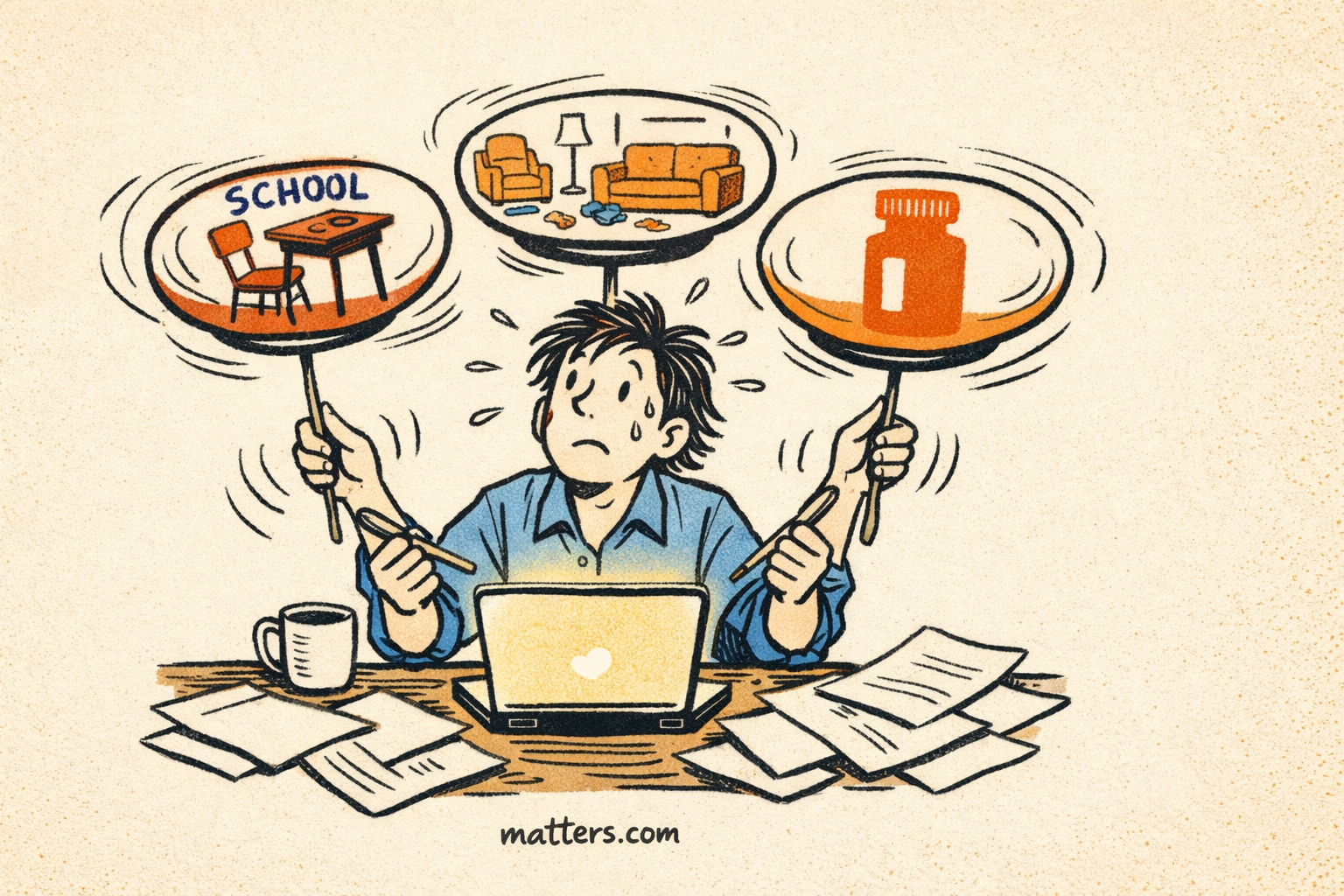
Today’s headlines orbit safety and trust — at home, in schools, and inside the mind. From parents stretched thin to education leaders tripped up by AI and mounting debates about when to stop psychiatric drugs, the news is asking who protects whom and how.
Parenting
Parents stretched thin, safety gaps, and a beloved community voice lost
New Pew data show working parents increasingly feel like they’re juggling two full-time jobs, pushing for more employer support as summer care and inflexible schedules bite (Pew). [P]Tragedy and accountability collide as Jill Smokler, founder of Scary Mommy, died at 48 after glioblastoma, reminding online parenting communities of fragility and shared grief (ABC7), while blood-tests-for-lead policies in Milwaukee expose how child safety often falls to parents, not landlords or regulators (Governing).
Education
AI missteps and federal research cuts put schools on edge
A failed AI chatbot venture plunged L.A. Unified into scandal and prompted Superintendent Alberto Carvalho’s resignation amid an FBI probe, a cautionary tale about rushing edtech (EdWeek). [P]Meanwhile the Trump administration’s push could undercut the Institute of Education Sciences, threatening data that shape national policy, even as local wins — like Paso Robles’ inclusive preschool model — point to cost-saving early intervention wins for special education (Politico; EdSource).
Mental Health
Systems strain, new funding, and a national conversation on deprescribing
Investigations expose psychiatry gaps in Texas and psychiatric emergency services are buckling under demand, illustrating how jails and ERs are shouldering community care shortfalls (Statesman; STAT). [P]At the policy level, deprescribing (tapering psychiatric meds) has entered federal debate while HHS/SAMHSA is directing millions toward tribal mental-health and substance-use programs — a push and a pivot that could reshape access and standards (NYT excerpt; NativeNews).
Psychology
New studies nudge how addiction, Alzheimer’s, and teen bonds are understood
Research warns that drinking about 14 drinks per week carries a measurable lifetime risk of alcohol-related death with little proven upside, nudging public-health conversations on 'moderate' drinking (Psychology Today). [P]Another study links stable personality traits to distinct molecular subtypes of Alzheimer’s — suggesting psychology could help decode biology — while teen attachment research shows parental phone focus is weakening secure bonds, a tiny device causing big relational ripples (News-Medical; Psychology Today).