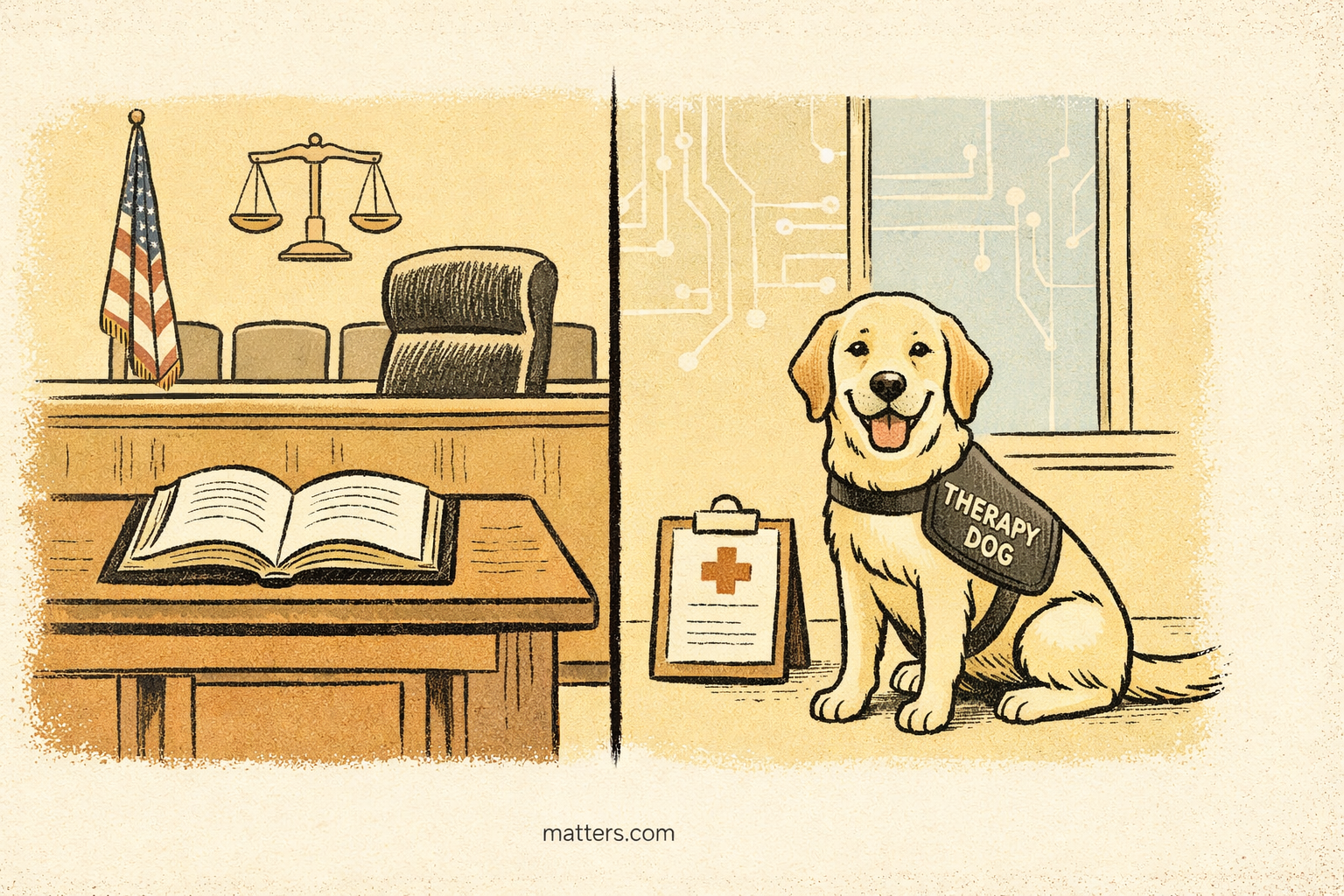
A turbulent day where courts, conflict and clinical innovation collide: legal rulings threaten protections for hundreds of thousands of refugees even as new PTSD tools and funding models promise help for survivors. Expect policy shocks, advances in brain and digital therapies, and a reminder that trauma recovery is both political and profoundly human — sometimes with therapy dogs and drones in the same headline.
Refugees
TPS under threat while Europe tweaks who qualifies
The Supreme Court's 6–3 decision in
Mullin v. [P]Doe clears the way to strip hundreds of thousands of migrants of
Temporary Protected Status, imperiling families already reliant on protections. At the same time the EU proposes changes to Ukraine temporary protection through March 2028 that would
exclude fighting‑age men, even as universities and UN agencies mobilize campus support and emergency aid for earthquake‑hit and displaced populations.
Mental Health
AI chatbots, school services and prevention push into mental health
Schools and health systems are piloting AI counselors to plug gaps left by scarce school psychologists — a controversial move covered in
Forbes — while states expand in‑school services and peer programs to reach youth. [P]Simultaneously, national efforts touch everything from firearm‑linked suicide prevention partnerships to personalized psychiatry platforms and alarming trends in male suicide and medication debates, underscoring that access, tech and prevention must move in step.
Post Traumatic Stress Disorder (PTSD)
From accelerated aging to brain stimulation — new PTSD fixes
Researchers link PTSD in World Trade Center responders to molecular signs of
faster biological aging, raising stakes for long‑term care, while neuromodulation and
transcranial magnetic stimulation (TMS) show symptom reductions in clinical studies. [P]The coverage spans athletes harmed by abusive coaches to calls for safer training environments, reminding clinicians that prevention and cutting‑edge treatment must travel together.
PTSD
FDA clears home device and new drug hopes expand options
Stanford won FDA De Novo approval for a
home medical device to treat adult PTSD, opening an at‑home treatment frontier described by Stanford Medicine
here. [P]Alongside, TMS studies, a promising SPC‑15 drug passing stability tests, and recovery programs for veterans mark an encouraging push to broaden effective, scalable PTSD care.
Ukraine Crisis
Drones, strikes and shortages reshape battlefield and politics
Ukrainian drone and artillery strikes are disrupting Russian logistics and fuel supplies in Crimea and Kherson, deepening an
energy and infrastructure crisis that pressures Moscow economically and tactically. [P]Despite military shifts, the humanitarian toll remains severe — millions displaced — and European leaders are already planning reconstruction and recovery coordination in Gdansk.
Alcohol and sexual assault
Alcohol frequently features in sexual assault prosecutions
Recent cases show courts taking incapacitation seriously: an Arizona man got 7+ years for assaulting a passed‑out teen and a California father was jailed in an incest‑linked case where alcohol preceded a suicide, highlighting how alcohol‑facilitated crimes shape legal outcomes and survivor narratives. [P]These rulings underscore the forensic and therapeutic complexity clinicians face when alcohol and trauma collide.
Rape and sexual assault
High‑profile and cold cases move through fits and starts
Prosecutors dropped some rape charges in the ongoing Harvey Weinstein saga, reflecting legal hurdles after mistrials
reported, even as decades‑old cold cases and recent arrests show justice can still arrive late but meaningful. [P]Alarming incidents include professional abuses and social‑media grooming cases that demand stronger prevention in schools and online safety measures.
Addiction
Policy experiments and safer treatments reshape recovery options
Albuquerque expanded a $750 monthly guaranteed income tied to trauma and addiction services to test whether cash plus care reduces harm, while federal and state moves ease methadone pharmacy access and spotlight a possible non‑addictive opioid from NIH research. [P]Funding threats to Medicaid services in West Virginia and kratom restrictions in Florida show the policy tug‑of‑war around access and risk.
Dogs
K‑9s in the headlines: from therapy to crime scenes
Therapy and service dogs get celebrated after 25 years of research showing real mental‑health benefits at VCU
here, while cadaver dogs played a key role in a Kansas City mass‑shooting probe. [P]At the same time shelters strain under stray surges and breeders face USDA enforcement, so it's a busy week for paws and paperwork.
Sports
McGrady buys into youth pipeline as World Cup reshapes the calendar
Tracy McGrady acquired 80% of the iconic ABCD basketball camp to revive a major high‑school scouting pipeline
reported, while the expanded 48‑team 2026 FIFA World Cup continues to rearrange the global sports calendar. [P]Off the field, tech is helping players dodge heat illness and NIL decisions keep changing athletes' financial calculus.
NASA
Cost cuts, Rocket Lab launches, and secret ice‑buried history
NASA's Artemis restructuring promises significant savings per the IG, even as Rocket Lab won contracts for three Electron launches beginning in 2027 to support sun and Earth science missions
reported. [P]In a quirky Earth‑meets‑space twist, NASA glaciologists using space tech rediscovered a buried U.S. military base under Greenland's ice, reminding everyone exploration sometimes reveals archaeology in a spacesuit.
Politics
Parties fray: socialism rises in primaries while GOP tensions grow
Democratic primaries show a stronger socialist influence in places like New York as Wisconsin watches similar dynamics, while Republicans face internal strain as figures like Tucker Carlson openly criticize Trump, signaling a fractious 2026 map. [P]Campaign finance and abortion regulation fights also heated up, with state and court strategies likely to shape candidates and turnout.
Addiction psychology
Platforms and perception push addiction research forward
Instagram's CEO testimony in a landmark case is forcing addiction researchers to refine definitions of social‑media dependence, and clinicians are redoubling efforts to treat drug addiction as a disease rather than moral failure. [P]The debate matters for diagnosis, public messaging and the therapeutic approaches used in recovery work.
Addiction psychiatry
Provider misconduct and new behavioral risks strain care systems
A New Jersey psychiatrist pleaded guilty to trading prescriptions for sex, spotlighting how professional misconduct can worsen addiction‑care trust
reported, while overdose deaths and misuse of weight‑loss drugs reveal gaps in screening and monitoring. [P]Behavioral addictions — from shopping to exercise — are also moving into clinical view, widening the field.
Refugees in Europe
Europe tightens doors while human‑rights alarms ring
Several European states are proposing stricter temporary protection rules that could exclude military‑age Ukrainian men and tighten eligibility, prompting warnings from human‑rights officials about rollbacks to legal safeguards
reported. [P]Simultaneously, EU talks about returns to Afghanistan and country‑by‑country implementations of the Temporary Protection Directive show policy divergence across the continent.
Career burnout
Leadership and AI emerge as core burnout drivers
Experts frame burnout as a leadership failure tied to poor psychological safety and unbalanced teams, urging structural fixes rather than wellness slogans
noted. [P]Meanwhile AI readiness gaps and creator‑economy pressures are accelerating exhaustion, so boundary setting — like ignoring after‑hours emails — is finally getting the respect it deserves.
Campus sexual assault
Digital grooming and security lapses spotlight campus risks
Recent investigations into sexual assault at a Texas junior high and cases showing predators using Instagram and Snapchat highlight how online grooming pathways put students at risk and strain school safety systems
reported. [P]The pattern pushes campuses to blend digital literacy with physical security reforms to better protect vulnerable students.
Book
New books map immigration power and summer reading tips
A new exposé details Stephen Miller's outsized role shaping Trump‑era immigration policy, offering an insider look at how White House aides rewired deportation and border priorities
reported. [P]On a lighter note, educators are sharing summer reading strategies and libraries grapple with rising e‑book and audiobook budgets — a reminder that ideas travel best when everyone can afford the ticket.
Burnout (psychology)
AI pressure and boundary setting dominate burnout advice
Psychologists warn that unchecked AI workloads accelerate cognitive overload and role ambiguity, intensifying burnout risks and demanding new leadership approaches
reported. [P]Clear boundaries like avoiding after‑hours emails are gaining validation as practical, effective defenses against chronic exhaustion.
Narcissistic abuse
Family estrangement and complicated reconnection stories
Personal accounts show the long shadow of narcissistic abuse: one woman described cutting contact with a narcissistic mother for 15 years before attempting a fraught reconnection, illustrating how recovery can be non‑linear and emotionally complex
reported. [P]These stories reinforce why trauma‑informed approaches (and tools like guided EMDR) are essential for safe, staged healing.