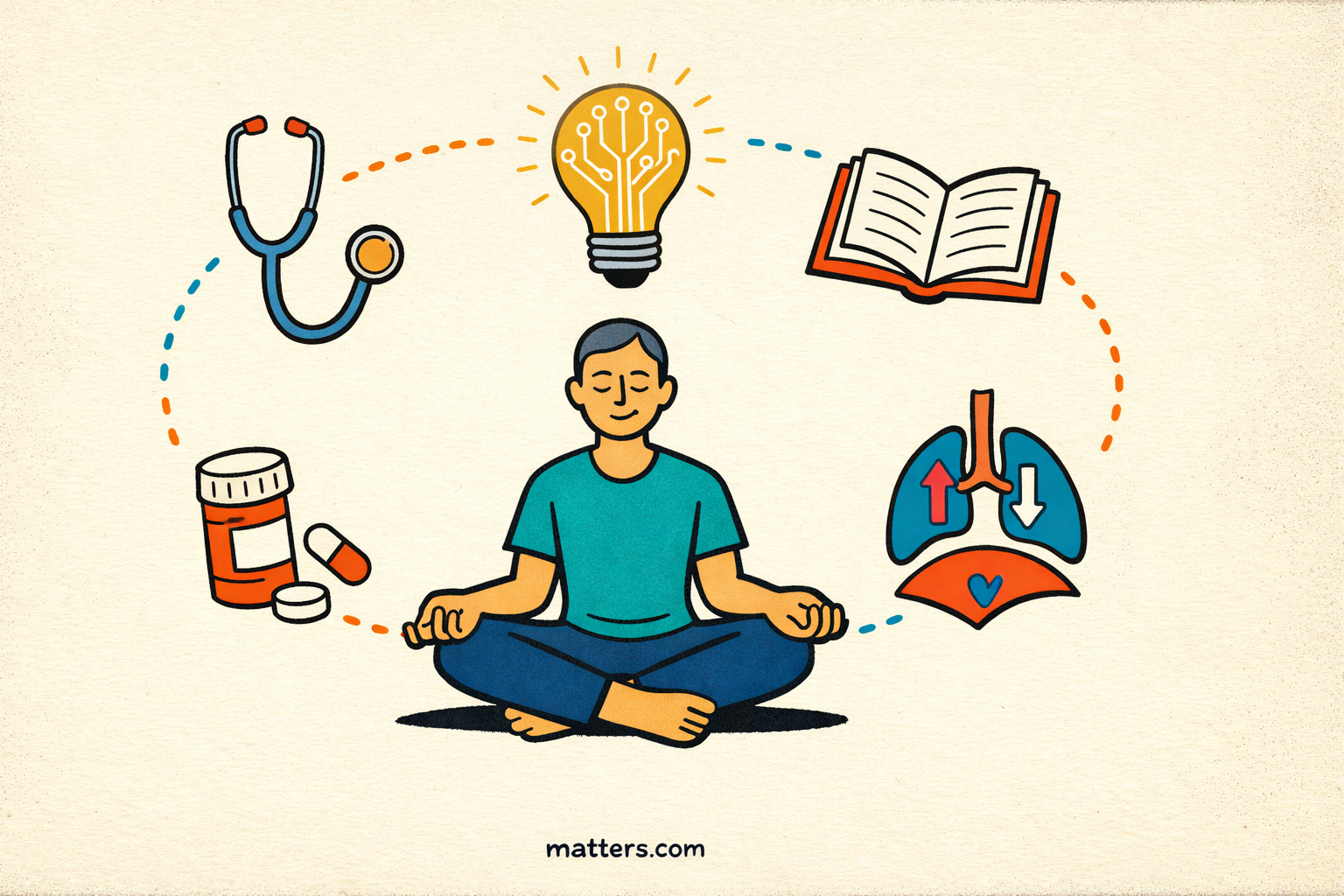
Big moves on mental‑health policy and treatment collide with human stories — hopeful innovations (breathing exercises, psilocybin, ketamine) sit alongside policy fights and heartbreaking failures in care. Expect debates about AI, access, and accountability that matter to clinicians, caregivers and anyone trying to heal trauma in large, messy systems.
Mental Health
Policy, tech and new treatments reshape mental‑health care
Parliamentary debate in Canada considers expanding
medical assistance in dying to people with mental illness, forcing a wrenching ethics conversation about care and end‑of‑life choices (
Jurist). [P]Meanwhile the U.S. sees a federal HHS initiative to expand treatment and recovery support and researchers push forward with
psilocybin and AI‑specialized mental‑health tools as new clinical and tech frontiers (
HHS initiative,
psilocybin story).
Book
Old books, new audiences — and Oprah keeps the discovery engine humming
TikTok turned a 1983 children's title into a sales surge forcing UNM Press to scramble to meet demand (
UNM Press), while Mary Beard’s new essay collection argues classics still bite back with modern relevance. [P]Meanwhile Oprah’s pick from Jenna Bush Hager’s imprint underscores how a single curator can reset a book’s fate.
Dogs
From heartbreak at a shelter to a 1,000‑mile canine odyssey
A Northern California rescue drew outrage after investigators found
117 dead dogs, many with gunshot wounds, renewing scrutiny of shelter oversight (
BBC). [P]On a lighter — if astonishing — note, 13‑year‑old Apollo traveled over 1,000 miles from Florida to New York before turning up at a police station, proving dogs have better nav systems than some humans (
ClickOrlando).
NASA
Moon bases, cotton‑candy planets and AI medics for astronauts
NASA science is splashing across scales: Webb mapped millions of stars in
Messier 82 while astronomers found two unusually low‑density exoplanets that are almost 'cotton‑candy' light (
Webb,
exoplanets). [P]Back on mission ops, AI medical advisors are being trialed for deep‑space emergencies and lunar base planning now includes quarantine protocols and power schemes (solar + nuclear) for long stays.
Politics
Courts, budgets and AI reshape the political landscape
The Supreme Court’s justices debated race in a TPS case, spotlighting how judicial language steers civil‑rights politics (
WP), while federal cuts and suspended research grants signal a new chapter in science policy under the current administration. [P]Down ballot, Trump‑aligned endorsements continue to rearrange primaries and housing and immigration moves keep lawmakers and voters on edge.
Addiction psychology
Screen time, nature and gender shape addiction insights
Researchers explain how social platforms exploit variable rewards to deepen
social‑media addiction, and therapists are watching behavioral cues in kids’ toy machines as early vulnerability markers (
Economics Times). [P]Nature therapy resurfaces as an evidence‑backed adjunct to recovery, while quitting cigarettes shows notable gender differences in the first 24 hours.
Refugees
Conflict, new legal routes and the human toll of detention
Fighting in Gaza continues to displace civilians, with strikes on refugee areas causing casualties and fresh humanitarian trauma (
Middle East Eye). [P]The UK moves to open safe sponsorship and community asylum routes even as detention centers and politicized discourse strain public sympathy and mental‑health needs for displaced people (
AP,
Guardian).
Post Traumatic Stress Disorder (PTSD)
Breathwork and screening push practical, low‑cost PTSD tools
An eight‑week guided slow‑breathing program reduced veterans' fight‑or‑flight responses, offering a simple, scalable adjunct for trauma care (
PsyPost). [P]National screening efforts and public education continue to broaden recognition of hidden PTSD symptoms, helping link sufferers to treatment sooner.
PTSD
From first‑responder funds to psychedelic research for trauma
Ohio created a
PTSD Fund Commission to help police and firefighters access care after job trauma (
Norwalk Reflector). [P]Elsewhere, Texas is channeling money into psilocybin studies and aging research links long‑term PTSD to accelerated physical decline — both pushing the field toward novel treatments and urgent prevention.
Alcohol and sexual assault
High‑profile allegations and long‑running abuse cases move forward
Corporate fallout followed allegations against Domo’s founder, who stepped down amid sexual‑assault claims tied to a work trip (
Business Insider). [P]Prosecutors are pursuing numerous charges in long‑running abuse cases, and civil suits continue to advance accountability in local political scandals.
Rape and sexual assault
Appeals and athlete accusations keep accountability in the headlines
A California appeals court upheld Harvey Weinstein’s 2022 rape conviction but ordered resentencing, keeping public attention on high‑profile accountability (
ABC13). [P]Simultaneously, rape and sexual‑assault charges involving football players are overshadowing tournaments and prompting renewed calls for institutional reform.
Refugees in Europe
EU extends protection for Ukrainians — with new caveats
The EU plans to extend temporary protection for more than
4.3 million Ukrainian refugees through March 2028 but will impose restrictions affecting draft‑age men, tightening eligibility even as the bloc maintains safety nets (
MSN,
KyivPost). [P]The move balances humanitarian sheltering with political and security concerns.
Addiction
Non‑addictive opioids and rising internet rehab demand
NIH researchers flagged a possible
non‑addictive opioid candidate that could transform pain management and cut addiction risk (
MedicalEconomics). [P]At the same time, clinics report a surge in patients seeking help for internet and phone compulsions, signaling new frontiers for treatment.
Career burnout
Law loses talent fast; AI reshuffles the job map
Study shows 71% of criminal lawyers quit within three years, revealing a severe retention crisis fueled by burnout and low pay (
The Advocate). [P]Meanwhile AI is both a pressure and a lifeline: automation trims some roles but opens higher‑paying AI jobs that could ease burnout for a few — and widen disparities for others.
Sports
Women's pro teams on the rise and World Cup inspiration
Columbus is actively recruiting WNBA and pro women’s hockey franchises to grow local sports ecosystems and fan bases (
Spectrum). [P]The FIFA World Cup continues to nudge kids toward new sports, reminding cities that big tournaments seed long‑term participation.
Burnout (psychology)
Chronotypes question the tyranny of 9‑to‑5
New chronotype research argues fixed 9‑to‑5 schedules ignore biological clocks and may drive burnout, bolstering calls for flexible work arrangements to match natural peaks and reduce chronic exhaustion (
MSN).
EMDR
EMDR keeps proving its clinical value for trauma recovery
New coverage highlights EMDR’s effectiveness in unlocking long‑standing traumatic memories and promoting recovery, reinforcing its role alongside other trauma treatments (
The Courier). [P]The therapy’s adaptability for telehealth and intensive programs continues to broaden access for survivors.
Addiction psychiatry
Ketamine meta‑analysis sharpens view of fast‑acting options
A meta‑analysis of 26 trials shows ketamine’s promise for rapid relief of depression, sparking discussion about its role for patients with co‑occurring mood and substance‑use disorders (
ClinicalTrialVanguard). [P]Clinicians weigh benefits against addiction potential and delivery models.
Ukraine Crisis
EU aid friction as Slovakia balks at defense package
Slovakia refused to join a proposed
€70 billion EU defense funding package for Ukraine, highlighting fractures in European support and complicating coordination for long‑term military aid (
BreakingTheNews). [P]The split raises questions about sustaining supplies and training for continued Ukrainian defense needs.