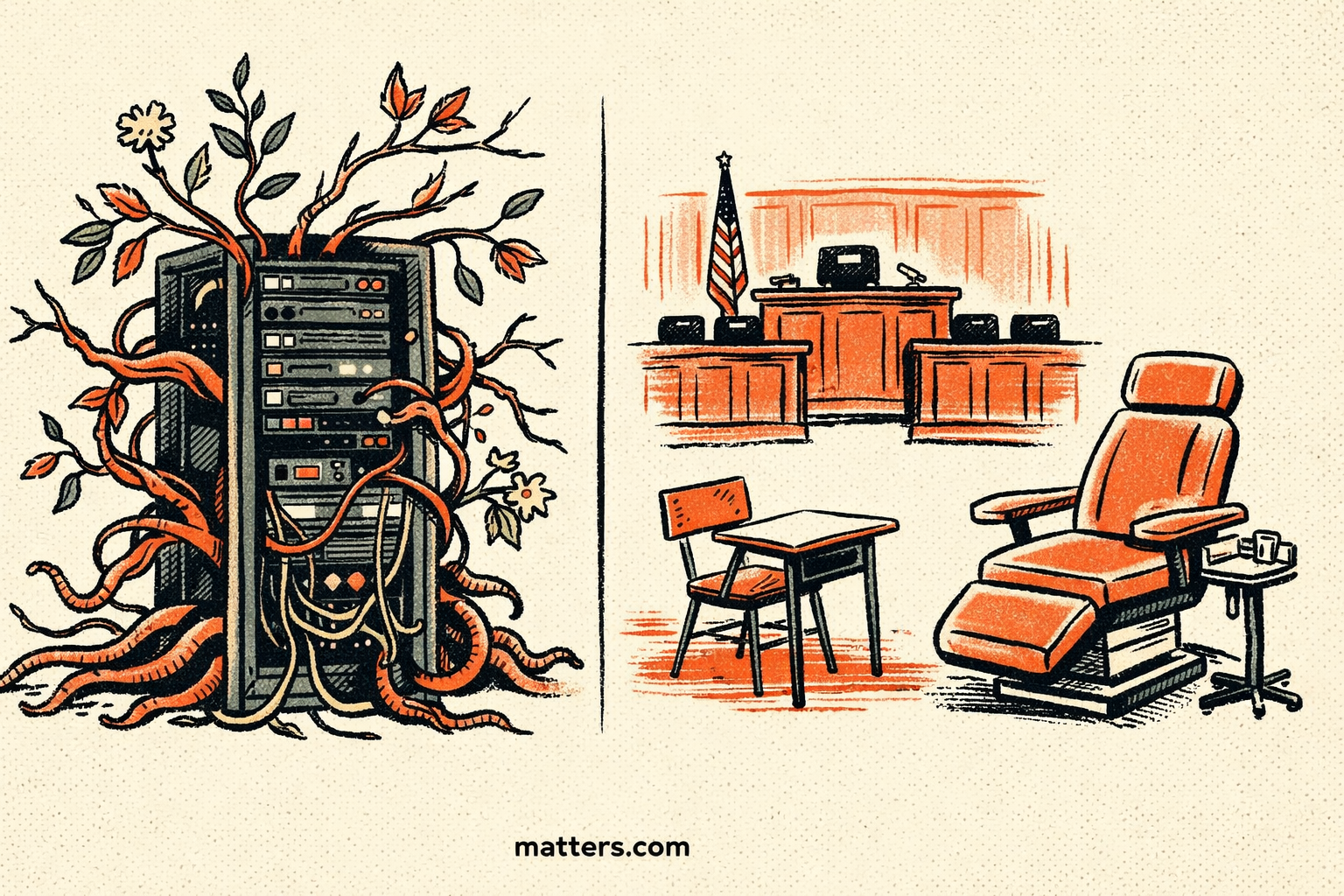
Big-picture tremors today: artificial intelligence keeps bursting out of labs and into courts, clinics, classrooms and campaigns — sometimes helpful, sometimes hilariously tone-deaf. Around that, sharp local moves on youth safety, incarceration reform, and faith-based accountability are quietly changing how institutions actually touch people's lives.
Artificial Intelligence
AI touches politics, health, energy and jobs — and keeps asking for regulation
AI-driven deepfakes and image-synthesis tools are reshaping politics — including a mocked Trump golden-eagle post — and pushing Congress to debate the
KIDS Act and platform accountability (
example). [P]At the same time, health and privacy alarms piled up: researchers found patient data can be extracted from medical models and lawmakers are proposing bans on selling health data from chatbots (
privacy study,
policy push). Finally, the AI economy keeps straining grids and markets — from Anthropic's Fable 5 return after Commerce action to data-center power debates and job-disruption arguments — forcing regulators, utilities and investors to scramble for rules and electrons (
Anthropic).
Social Media
Platforms under fire for child safety, mental-health prompts, and secrecy
Research and lawmakers say child-safety tools often fail, prompting calls for tougher oversight and fresh state rules like Minnesota's new pop-up mental-health warnings (
child-safety study,
Minnesota rule). [P]At the same time, social platforms are a growing source of health decisions and clinical data — good for research, risky for misinformation — while legal fights over secret FBI payments raise transparency questions (
health influence,
FBI payments).
Faith-based Organization
Accountability and legal fights test church governance and public roles
High-profile governance lapses — from churches resisting reconciliation to Daystar listing deceased board members — are spotlighting institutional accountability and legal risk in faith groups (
reconciliation story,
Daystar filings). [P]Courts are also shaping religious-speech protections: a ruling favored flight attendants fired for faith-based views, while charities like the Salvation Army push to dismiss suits against shelter operations on ministry grounds (
religious freedom ruling,
Salvation Army).
Rehabilitation
Creative therapies and programs push rehab wins from prisons to labs
California opened an
honor dorm at San Quentin that reports record rehabilitation success and falling recidivism, underscoring program-driven reform (
San Quentin honor dorm). [P]In medicine and tech, the FDA cleared Bioness's PoNS neuromodulation for stroke gait recovery while VR-plus-nerve-stimulation platforms show early promise — rehabilitation is getting high-tech and heart-led (
PoNS clearance,
VR rehab).
Incarceration
Policy tweaks, education wins, and safety alarms reshape jails and reentry
Legislative changes expand second-chance paths for juveniles seeking parole, even as counties confront custody safety failures after a Lorain County jail death spurred an investigation (
juvenile parole bill,
Lorain County death). [P]On the hopeful side, reentry and education programs — from She Brews' support services to incarcerated students earning forestry AS degrees — are expanding pathways back to community and work (
She Brews,
Lake Tahoe degrees).
Juvenile justice system
Tougher transfer laws and capacity strains collide with supervision concerns
Mississippi's new law will start trying juveniles charged with armed violent felonies as adults on July 1, a major procedural shift that raises questions about age, rehabilitation, and fairness (
Mississippi law). [P]At the same time, a Maryland case where a 13‑year‑old was released on electronic monitoring has reignited debate over supervision quality, and Mecklenburg County is reopening a detention center to ease overcrowding — infrastructure and practice are under strain (
electronic-monitoring case,
Mecklenburg reopening).
Music
Artists fight back as AI training and copyright lag behind creativity
Independent musicians are up in arms over
YouTube's AI-training stance that uploaded tracks grant usage rights, echoing broader copyright gaps that left artists like Nick Cave and AC/DC vulnerable in Australia (
YouTube dispute,
copyright gaps). [P]Meanwhile, business-as-usual music news continues — Ashe signs major deals and festivals book global acts, proving music industry momentum hasn't skipped a beat (
Ashe deal,
iHeart lineup).
Youth
Prevention programs and access fights frame youth health and sport
The FDA's 'The Real Cost' campaign is being credited with preventing
444,000 youths from starting e-cigarettes, a clear win for prevention messaging (
campaign results). [P]But debates continue: Congress is probing private-equity's growing foothold in youth sports and communities like Lewiston are wrestling with spikes in youth violence — access and safety remain front-and-center (
PE in youth sports,
Lewiston meeting).
Central America
Politics tilt right as solar and tourism face mixed fortunes
Voters across the region are swinging conservative on security and dissatisfaction with leftist governance, reshaping national political trajectories (
political shift). [P]Economically, demand for
solar energy is surging despite curtailment issues, while tourism struggles with uneven travel and geopolitical headwinds — energy investment and voter sentiment will jointly shape the near term (
solar demand,
tourism).
Mentorship
Scholarships and community programs fortify mentorship pipelines
Local and civic groups are pairing financial support with sustained guidance — 100 Black Men of Greater Mobile celebrated scholarship-driven mentorships that boost college access (
scholarship program). [P]Police-led and sports mentorships also expanded: Vicksburg's U-Turn program and pro-athlete mentoring show scalable models that link relationships to long-term youth outcomes (
U-Turn,
Stevie Johnson).
Juvenile Delinquency
Educators push back on policing in schools as solutions shift to support
Education leaders are rejecting tougher in-school policing and lower age limits, arguing punitive measures worsen juvenile outcomes and that investment should focus on support, counseling, and relationships (
educators' stance). [P]The debate underlines a broader pivot from enforcement to prevention and rehabilitation in youth policy.