Dogs · Matters.com — Why big dogs literally age faster

Digest Newsletter
·
Oct 20, 2026
Dogs · Matters.com — Why big dogs literally age faster
Welcome to Matters.com™ beta, where the world shows what matters. More information? Click here.
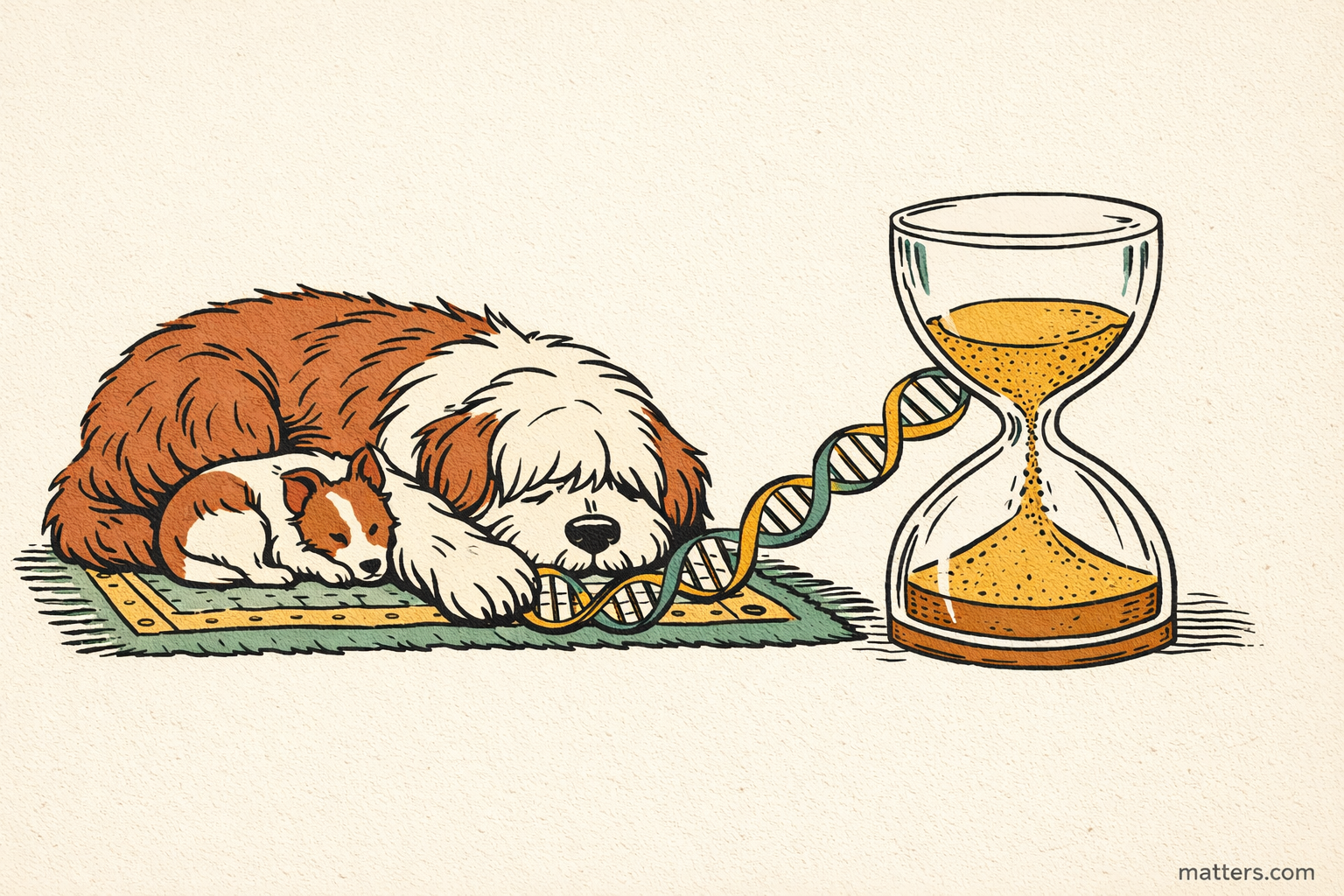
New studies show big dogs age faster at the molecular level
Multiple teams have converged on the same puzzling pattern: larger and male dogs show faster DNA aging changes than smaller dogs. Researchers published overlapping reports this week — read the Reuters piece for a clear overview and the Vice story for the genetics angle — and together they point to a molecular pattern that helps explain shorter lifespans in big breeds. For owners and vets this doesn't change daily care immediately, but it sharpens where researchers will look for interventions and breed-specific health guidance: what the molecular clock shows, and why it matters for lifespan.
70 dogs leave the meat farm
After a decade-long effort, rescuers in South Korea saved 70 dogs from a single meat farm — a newsworthy rescue that highlights changing public pressure and the logistics of rehoming large groups of dogs: the rescue and aftermath.
Dogs and the Bouba–Kiki effect
New experiments suggest dogs, like humans, prefer rounded sounds for rounded shapes and spiky sounds for jagged shapes — a cute hint that some cross-species perceptual links may be deeper than we thought: dogs choose 'bouba' vs 'kiki'.
Chernobyl dogs and long-term risks
Scientists are studying whether dogs living around Chernobyl passed radiation-linked DNA changes to offspring, raising tricky questions about wildlife recovery and multi-generational effects: what researchers are finding.
Dogs' third eyelid
Dogs have a third eyelid (the nictitating membrane) that helps protect and lubricate the eye; if you suddenly see a flash of pale tissue in the corner of their eye, it’s worth a vet check because it can signal illness or injury.