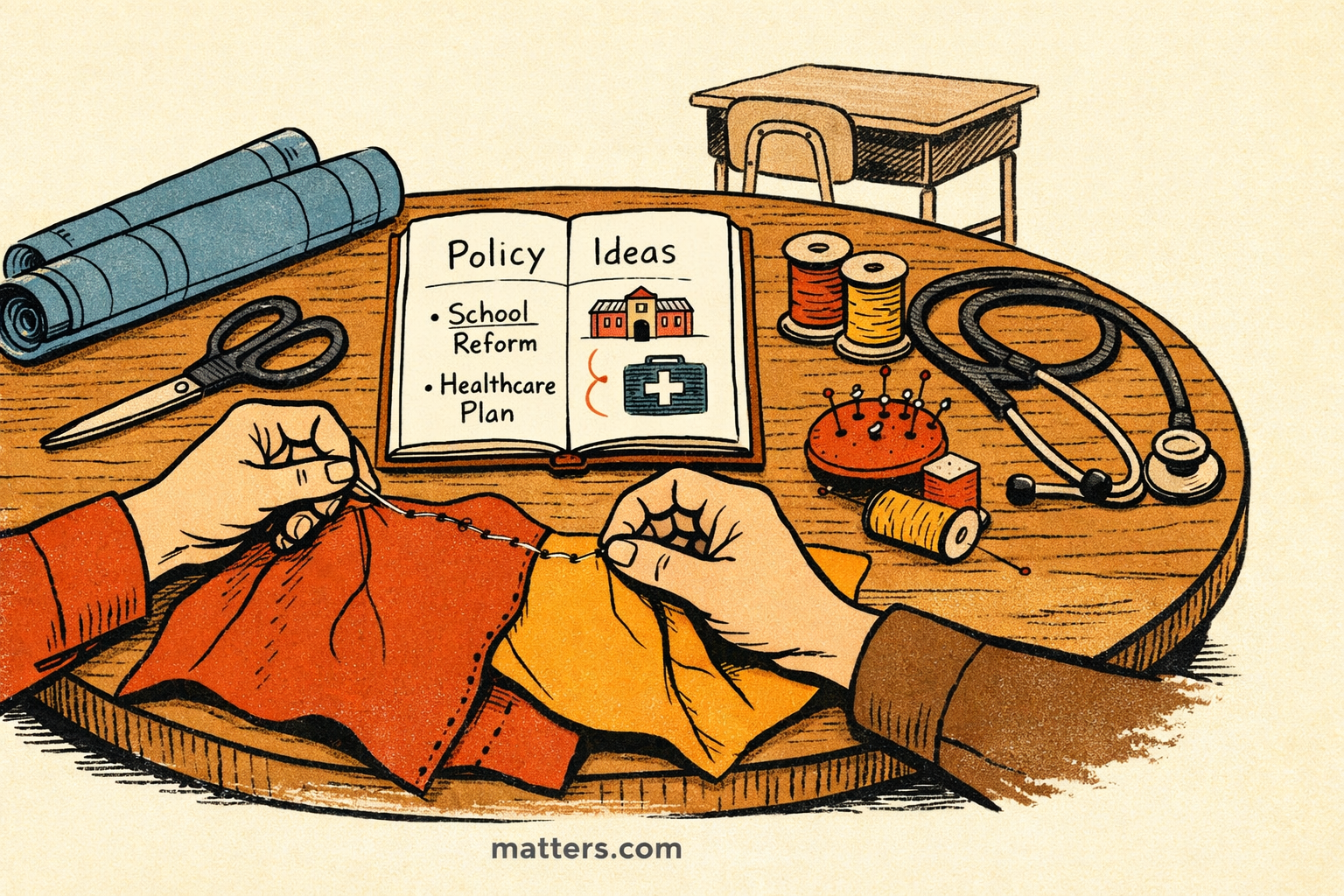
Big shifts today in how people get help, how artists make art, and how communities stitch themselves back together — sometimes literally. Expect policy moves, tech debates, and a few heartening DIY solutions that remind everyone: fixes can be systemic or as simple as a sewing circle.
Mental Health
States, campuses, and courts scramble to meet rising mental-health needs
Funding and policy moves aim to expand care — Maryland pledged
$96 million for school-based services to reach 200,000 students (
story), and Senators Scott and Blumenthal reintroduced federal legislation to boost college mental-health resources (
press release). [P]At the same time courts are weighing competency and forensic care in criminal cases (
UW murder case) while crises from veteran suicide walks to stalled school counseling grants underline gaps in crisis response and access.
Music
AI reshapes creation and release strategies as artists push back and experiment
Artists and institutions are clashing and collaborating over AI:
Boy George launched Artist Included with an AI-assisted re-recording (
launch) while Google floated AI copyright proposals that could rewire rights for creators (
analysis). [P]Schools and listeners weigh in too — Berklee held an AI summit met with student protests, and Dutch polls show strong support for labeling AI-generated tracks, so transparency looks likely to be the new chorus.
Resilience
From solar panels to stitching circles — practical resilience on display
Communities are building resilience in tangible ways: two California centers added solar-plus-storage to keep services online during outages (
solar project), while Palestinian diaspora groups preserve identity and coping through traditional tatreez embroidery circles (
embroidery). [P]The message: resilience is both infrastructure and ritual, technical fixes plus threads of community.
Education
Curriculum fights, AI tools, and new paths into college reshape schools
Textbook battles and curriculum changes are heating up — Texas approved Bible reading for over
5 million students (
report), and debates over nationalism in history continue in places like Florida. [P]Meanwhile, AI arrives in classrooms via new Microsoft 365 features for teachers, and pathways into higher ed expand with Santa Barbara City College's PROMISE program serving over
10,000 students (
AI tools,
PROMISE).
Health
Harm reduction, policy tweaks, and the toll of rising costs
Public-health responses are getting creative: New York City installed vending machines stocked with overdose-prevention supplies on Staten Island using settlement funds (
NYC vending machines). [P]Policy changes aim to divert people to treatment — California gave judges clearer authority to route individuals into programs instead of jail (
Newsom bill) — even as millions lose ACA coverage and medical debt continues to block access to care.
Parenting
Real talk, family networks, and tools to help parenting students stay in school
Research and programs emphasize support over perfection: a University of Nebraska study finds intergenerational co-parenting with grandparents boosts child outcomes (
study), and Central Texas College won a
$250,000 grant to help student-parents juggle school and childcare (
grant). [P]Meanwhile, influencers and researchers urge authenticity over curated perfection, and a year-long AI parenting experiment argues tech should support—not replace—real human connection.